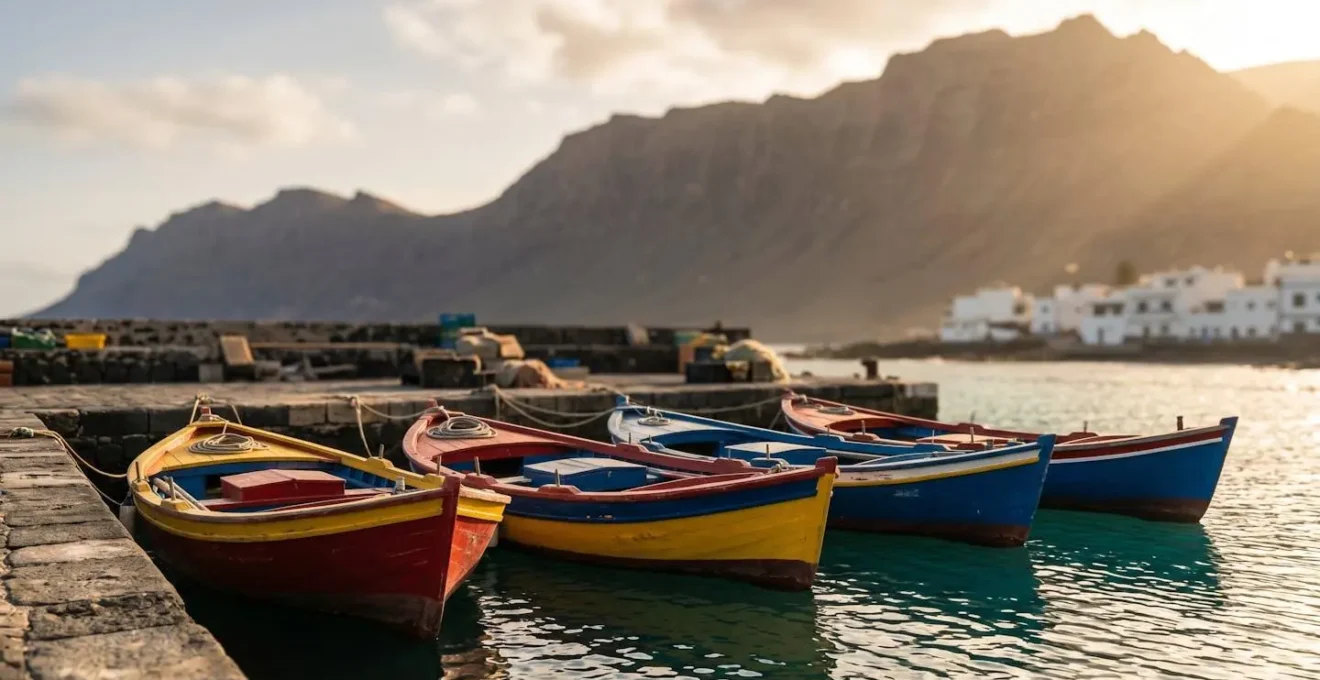
Many see Tajao and Los Abrigos as charming spots for fresh fish, but this view misses their fragile essence. The truth is, these are not tourist attractions; they are living communities, the last bastions of a maritime soul that is slowly being eroded. To truly visit is not to consume, but to understand the unwritten code of the harbor, respect the tools that provide a livelihood, and recognize that your presence has an impact on a way of life that is fighting to survive.
I can still feel the coarse texture of the nets under my young hands, the sharp smell of salt and diesel that clung to my father’s clothes like a second skin. Tourists now come to my home, to places like Tajao and Los Abrigos, following guides that tell them where to find the “freshest fish.” They are not wrong, the fish is fresh. But they are missing the story, the struggle, the very soul of the sea that breathes in these harbors. They see a postcard, a pretty picture of colourful boats bobbing in the water.
But what if the real experience isn’t about what you can take—a photo, a meal—but what you can understand? If the key to unlocking the true Canary Islands isn’t found on a menu, but in the quiet observation of a fisherman mending his net, in the unspoken rules of the dock, and in the economic heartbeat of a Cofradía? This is not a guide to tell you what to eat. This is an invitation to see what is really there, through the eyes of someone who calls this place home. We will explore the meaning behind the facade, from the boats themselves to the very real threats they face.
This article peels back the layers of the postcard to reveal the living, breathing heart of Tenerife’s fishing heritage. Below, we’ll navigate the essential knowledge needed to visit these villages not as a tourist, but as a respectful guest.
Summary: The living soul of Tenerife’s last fishing sanctuaries
- Why Artisanal Fishing Boats Are Small and Brightly Painted?
- When to Arrive at the Harbor to See the Catch Being Unloaded?
- Gentrification Risks: How Tourism Changes the Soul of Fishing Ports?
- The Mistake of Walking on Fishing Nets Drying on the Dock
- Cofradía Restaurants: Why Eating Here Supports the Local Community Directly?
- Vieja (Parrotfish): Why Is It the Most Iconic Sustainable Catch?
- Why the North of Tenerife Offers a Truer Canarian Experience?
- Eating Seafood Sustainably in Tenerife: Which Fish Should You Avoid?
Why Artisanal Fishing Boats Are Small and Brightly Painted?
Visitors always comment on the boats. They call them quaint, picturesque. And they are. But their design is not for aesthetics; it’s a story of regulation and tradition. Their size is a matter of law and practicality. These are not deep-sea trawlers; they are vessels for men who work the coast. European Union regulations have long defined and limited the size of the artisanal fleet, with many boats falling into a specific category of bait boats measured not in romantic notions but in Gross Register Tonnage, according to European Parliament fisheries regulations.
And the colours? That’s a more complicated tale. While some will tell you it’s to spot them easily at sea, the truth is a mix of heritage and pragmatism. An old discussion among commercial fishermen noted a practical reason: “White was traditionally chosen because of what was a ‘yacht appearance’ but that evolved largely because all the colors tended to fade.” On our small boats, the vibrant blues, reds, and greens are a badge of identity, a flicker of defiance against the uniform white of larger, more industrial vessels. The bright paint, reapplied season after season, is a testament to an owner’s pride, a splash of life against the vast, indifferent blue of the Atlantic. It’s the boat’s soul made visible.
When to Arrive at the Harbor to See the Catch Being Unloaded?
The best time to arrive is not a time at all. It is a state of mind. You are not coming to see a show; you are stepping into a workplace at its most critical moment. The unloading of the catch is a tense, focused ritual of weighing, sorting, and selling. The air is thick with the scent of the ocean and the low hum of business. To be a welcome observer, you must become invisible, a ghost on the docks who understands the unspoken rules of this sacred space.
This is not a tourist attraction with ropes and barriers. The code of conduct is unwritten, passed down through a shared understanding of respect for the work. It requires you to read the room, to feel the rhythm of the port, and to understand that every movement has a purpose. Interrupting that flow is more than just rude; it’s a disruption to a man’s livelihood. For those who wish to watch, it is essential to follow the etiquette that we locals take for granted.
Your checklist for respectful observation
- Keep Your Distance: Maintain a minimum distance of 150 metres from any active fishing operations. Never crowd the fishermen as they work.
- Hands Off: Never touch the fishing gear. Nets, traps, ropes, and especially the freshly landed catch are the private, valuable property of the fishermen.
- Stay in Public Areas: Observe from designated public walkways on the docks. Do not block access routes used by fishermen, buyers, or their vehicles.
- Respect the Auction: The ‘canta’, or traditional verbal auction, is a serious transaction. Remain quiet and stand well back. Your voice has no place here.
- Ask Before You Shoot: Ask for permission before taking photographs of individual fishermen or their specific hauls. A nod of the head can make all the difference.
Gentrification Risks: How Tourism Changes the Soul of Fishing Ports?
I look at my father’s hands, or what’s left of them after a lifetime wrestling with nets and lines. They are a map of this life, weathered and strong. I see that same map in the hands of his friends, the men who still go out every morning. But now, when I walk through the harbor, I see a new map being drawn over the old one. It’s a map of holiday apartments, of souvenir shops, of restaurants with multilingual menus that have forgotten the names of the local fish.
This is what you call gentrification. We call it erasure. It’s a slow-creeping tide that promises economic benefit but washes away the soul of a place. For us, it is a constant pressure, another weight on top of everything else. According to US Forest Service research on fishing heritage, commercial fishers have been facing this pressure from coastal gentrification for decades, alongside rising costs and regulations. It’s a silent, grinding process. The value of the land they live on suddenly becomes worth more than the value of the life they live.
Each new development that pushes out a fisherman’s family, every traditional boat-to-plate eatery replaced by a generic bistro, is a stitch unraveled from the fabric of our community. The authenticity you seek as a traveler is a direct product of our struggle to exist. When the last fisherman can no longer afford to live by the sea, the “authentic fishing village” will be nothing more than a theme park, a hollow shell. And the soul of the sea will have finally moved on.
The Mistake of Walking on Fishing Nets Drying on the Dock
You see them spread out on the docks, intricate webs of twine drying in the Canarian sun. To a visitor, it might look like a rustic carpet, a shortcut from one point to another. To a fisherman, it is his most vital tool, his means of survival, his gold. Walking on a fishing net is one of the most profound acts of disrespect you can commit in a harbor. It is an act of ignorance that carries a heavy cost.
A tiny, unseen tear from a stone caught in your shoe can become a gaping hole when the net is under the strain of a full catch. That single hole means lost fish, which means lost income. And the net itself is not cheap. As one guide for professional gear states, “A $200 net lasting five years outperforms a $50 net requiring annual replacement.” My father and his colleagues use professional nets, tailored to the fish they hunt, and they are a significant investment. As research on ghost gear economics shows, every metre of damaged net represents a direct cost to the fisherman for replacement, not to mention the lost catch.
When you walk around the nets, you are not just taking a detour. You are acknowledging the value of a man’s labor. You are recognizing that this simple object of twine and knots is the difference between a good week and a week of debt. It is the tool that puts food on his family’s table and on the table of the restaurant you will eat at tonight. These are not decorations; they are the lifeblood of this community. Treat them with the reverence they deserve.
Cofradía Restaurants: Why Eating Here Supports the Local Community Directly?
Along the harbor, you’ll see many restaurants promising “fresh fish.” But there is a specific name you should look for: the Cofradía de Pescadores. This is not a brand name; it is a promise. A Cofradía is a fishermen’s guild, a cooperative that is owned and operated by the fishermen themselves. Eating at a Cofradía restaurant is the most direct way to ensure your money goes straight into the hands of the community you are visiting.
These establishments are the end point of a very short supply chain: from the boat, to the dock, to the kitchen, to your plate. There is no middleman. The fish is what was caught that morning, and the prices are set by the men who risked their lives to catch it. Tenerife is a leader in this model, a fact that speaks to our island’s deep-rooted connection to the sea. The island has 10 Cofradía fisherman guilds that deliver directly to markets and their own restaurants, making this a cornerstone of our local economy.
When you choose to eat at a Cofradía, you are doing more than just having a meal. You are casting a vote. You are voting for a sustainable economic model. You are voting to keep the fishing tradition alive. You are ensuring that the profits of tourism are shared with the people who create the very authenticity that drew you here in the first place. It is a simple choice that has a powerful impact, turning your dinner into an act of genuine support.
Vieja (Parrotfish): Why Is It the Most Iconic Sustainable Catch?
Ask any local what the taste of the Canary Islands is, and they will likely say, “vieja.” The parrotfish, with its distinctive beak and vibrant, almost painted scales, is more than just a fish; it is a cultural icon. It is the fish my grandmother cooked, the fish my father sought, and the fish I hope my children will one day know. Its importance is not just culinary; it is woven into the very fabric of our identity.
The Vieja is a sustainable choice precisely because of how it is caught. It grazes on algae on rocky bottoms, a habitat that is not conducive to destructive mass-fishing methods like trawling. Instead, it is caught using traditional, selective methods—often with a simple rod and line, one by one. This is fishing on a human scale. It is this intimate, respectful method of capture that has allowed Vieja populations to endure while other species have dwindled. It represents a balance between man and nature, a pact that has been honored for generations.
There is a very strong family and cultural rootedness mainly in fishing villages that for years have based their economic activity on fishing and this activity of entertainment has been inherited generation after generation.
– Pesca Recreativa Tenerife, Professional Fishing in Tenerife cultural heritage documentation
Choosing Vieja is choosing to participate in this heritage. You are tasting a piece of our history, a history of respect for the sea and its bounty. It is the flavour of sustainability, a delicious reminder that the best way to preserve a culture is often to celebrate it on its own terms.
Why the North of Tenerife Offers a Truer Canarian Experience?
I often hear visitors compare the arid, sun-beaten south with the lush, green north of the island, claiming the north is “more authentic.” It’s a common sentiment, and it holds a kernel of truth, but it misses the point. Authenticity is not a single story. The north’s charm is rooted in its colonial architecture and agricultural heritage. But our authenticity, here in the southern fishing villages, is different. It is starker, saltier, forged by the wind and the waves, not by fertile soil.
As one observer of the island rightly noted, “Because they aren’t picture-postcard pretty they generally don’t attract excursions and subsequently they’ve managed to preserve their unique Canarian personalities.” This is the key. Tajao and Los Abrigos are not trying to be pretty for tourists. They are working ports, and their beauty is a byproduct of their function, not their purpose. While the north has its beautiful historic towns and *Guachinches* born from a wine-making culture, our cultural pillars are the daily fish auction, the active fleet, and the cooperative restaurants. We offer a different, but no less “true,” Canarian experience.
The island’s two faces are a result of its geography, which in turn shaped its people and their traditions. The following table helps to understand these two pillars of Canarian authenticity.
| Aspect | North Tenerife | South Tenerife (Tajao/Los Abrigos) |
|---|---|---|
| Climate | Rainy, fertile, green landscapes | Arid, sun-beaten, volcanic terrain |
| Traditional Economy | Agriculture and wine (Guachinches) | Artisanal fishing (Cofradías) |
| Architecture | Colonial-era buildings, lush gardens | Functional fishermen’s houses, working harbors |
| Authentic Experience Type | Rural agricultural heritage, wine culture | Maritime traditions, boat-to-plate seafood |
| Tourism Development | Cultural tourism, hiking, wine routes | Variable: Tajao (rustic, less developed) vs Los Abrigos (more tourist-adapted) |
| Key Cultural Pillars | Vineyards, historic town centers, local festivals | Daily fish auctions, active fishing fleets, cooperative restaurants |
Key takeaways
- A fishing boat is a vital, regulated tool, not just a picturesque object; its size and color tell a story of law and tradition.
- A Cofradía is the heart of the community; eating there is a direct act of economic support for the local fishermen.
- Respect for gear is respect for people. A fishing net is an expensive, essential tool, and treating it with care is a sign of understanding.
Eating Seafood Sustainably in Tenerife: Which Fish Should You Avoid?
The final lesson the sea teaches is one of responsibility. The choices you make at the dinner table here in Tenerife have echoes that reach far beyond our shores. The global appetite for seafood has pushed many ecosystems to the brink. It’s a reality that we, as fishermen who depend on a healthy ocean, are keenly aware of. Data from international bodies paints a stark picture: according to United Nations FAO data cited by geographers, more than one-third of global fisheries are overfished, a situation that has worsened dramatically in recent decades.
So, which fish should you avoid? The answer is simple: avoid the unfamiliar and the imported. Be wary of restaurants serving salmon, cod, or other fish that clearly do not swim in our warm Atlantic waters. These are almost certainly frozen and imported, contributing to a global supply chain that often has a devastating environmental footprint. Likewise, be cautious of species like shark (often listed as ‘cazón’) or bluefin tuna (‘atún rojo’) during their off-seasons, as their populations are under immense pressure.
Instead, embrace the local. Ask your waiter, “What was caught today?” Look for names like Vieja, Cherne, Sama, Bocinegro, or Abade. These are the fish of our coast, caught by local fishermen using methods that are, by necessity, more sustainable. By choosing them, you are not only getting the freshest possible meal, but you are also supporting a local, small-scale fishing economy that has a vested interest in the long-term health of its own waters. This is the most powerful choice you can make as a visitor: to eat like a local, for the good of the locals and the ocean we all share.
Your visit can be a part of the problem, or a part of the solution. By following these unwritten rules, you honor a way of life and help preserve the very soul you came to find. Come as a guest, leave as an ally.