In summary:
- Gofio is a toasted grain flour from the Canary Islands, providing slow-release energy ideal for endurance activities like diving.
- Its unique toasting process (thermal pre-digestion) makes it easier to digest and gives it a lower glycemic index than oatmeal.
- Extremely versatile, it can be mixed with milk for a sweet breakfast or fish broth for a savory, nutrient-dense recovery meal.
- While maize gofio is naturally gluten-free, celiacs must look for certified products to avoid cross-contamination.
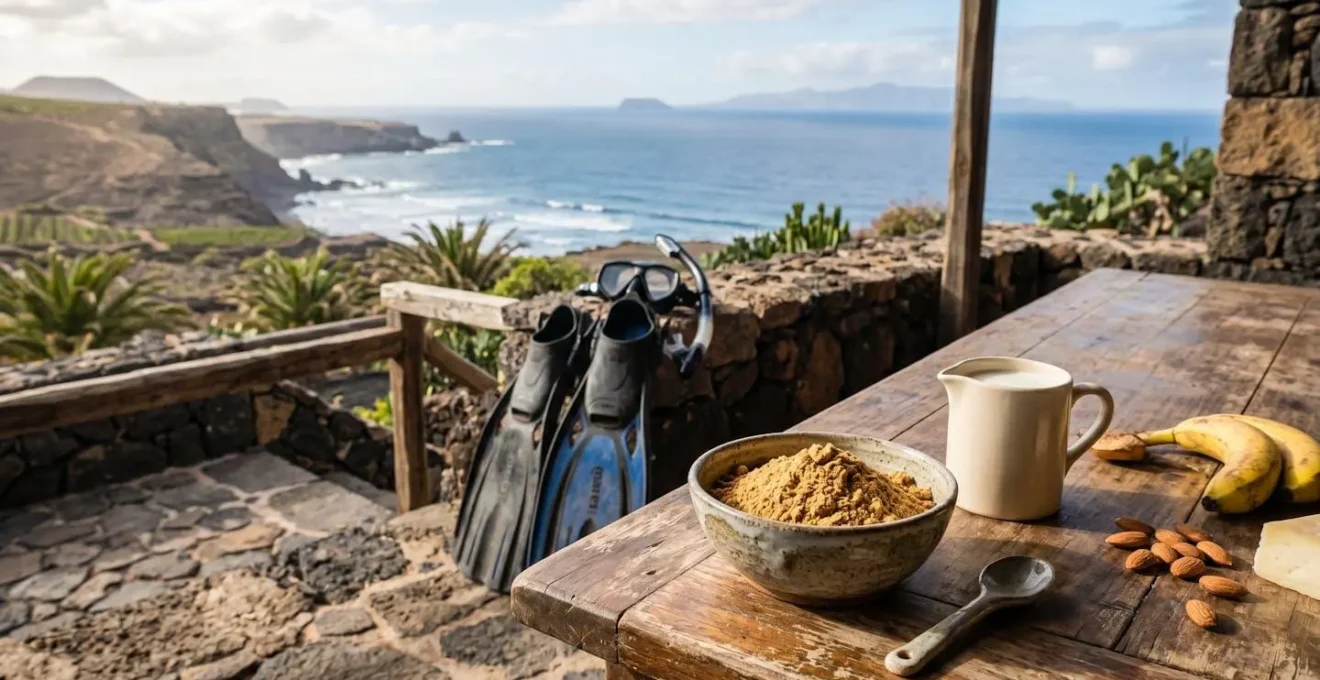
For any diver or endurance athlete, the quest for the perfect metabolic fuel is constant. We’re often told to rely on processed energy bars, gels, or classic oatmeal. But what if the ideal solution wasn’t invented in a lab, but perfected over a thousand years of human survival? Enter gofio, the humble-yet-mighty toasted flour that has powered Canarian islanders through everything from long sea voyages to periods of intense scarcity. This isn’t just another health food trend; it’s a piece of bio-historical engineering, a food designed by necessity to deliver maximum energy with minimal digestive load.
Most discussions about gofio stop at its definition—a simple flour. This is a profound misunderstanding of its purpose. The key lies in its unique preparation: the grains are toasted before being milled. This “thermal pre-digestion” changes its molecular structure, unlocking a suite of benefits that seem almost tailor-made for the demands of a modern diver. It’s not just about vitamins and minerals; it’s about the very nature of how that energy is stored, released, and utilized by a body under pressure.
This article moves beyond the surface to explore the functional science behind this ancestral superfood. We will dissect why its energy release is superior for underwater endurance, explore its surprising culinary versatility, trace its journey from indigenous tables to modern-day athletic diets, and provide practical guidance on choosing the right type for your needs. Forget the fleeting rush of a sugar-laden snack; it’s time to understand how this ancient wisdom can offer true glycogen resilience.
This guide breaks down everything you need to know about integrating this Canarian powerhouse into your nutritional strategy. Explore the sections below to understand its unique properties and how to best use it to fuel your underwater adventures.
Contents: Gofio as the Ultimate Diver’s Fuel
- Why Gofio Offers Better Slow-Release Energy Than Oatmeal?
- Milk vs Fish Stock: The Strange Versatility of Eating Flour
- How Gofio Survived from Indigenous Times to Modern Tables?
- Wheat vs Maize (Millo): Which Gofio Suits Your Taste Buds?
- Is Gofio Safe for Celiacs or Should You Be Careful?
- Bienmesabe: A Sugar Bomb for Glycogen Recovery?
- How to Structure a 45-Minute SUP Session for Maximum Leg Strength?
- Canarian Food for Divers: Best Meals to Refuel After Nitrogen Loading
Why Gofio Offers Better Slow-Release Energy Than Oatmeal?
The primary advantage of gofio as a performance food lies in its carbohydrate profile, which is fundamentally altered during its creation. Unlike oatmeal, where grains are typically steamed and rolled, gofio grains are toasted at high temperatures before being ground. This process, a form of thermal pre-digestion, breaks down complex starches and proteins, making them far easier for the body to assimilate. The result is a food that provides sustained energy without the digestive heaviness or bloating that can be problematic before a dive.
This pre-digestion directly impacts its glycemic response. While oats are praised for being a complex carbohydrate, gofio often performs even better. In fact, research indicates that gofio has a low glycemic index, meaning it releases glucose into the bloodstream slowly and steadily. This prevents the sharp insulin spikes and subsequent energy crashes associated with many breakfast cereals, including some processed oatmeals. For a diver, this translates to stable energy levels throughout a long dive, delaying fatigue and maintaining mental focus.
Furthermore, gofio is a nutritional powerhouse. It is naturally rich in essential minerals crucial for athletic function, including potassium, magnesium, iron, and zinc. These minerals support everything from muscle contraction to oxygen transport. It’s high in protein and carbohydrates but exceptionally low in fat, making it an ideal metabolic fuel for building and repairing muscle while providing the long-lasting energy needed for hours spent in the water.
Milk vs Fish Stock: The Strange Versatility of Eating Flour
One of gofio’s most remarkable traits is its incredible versatility, a quality born from its history as a survival food. It possesses a unique form of “nutritional osmosis,” readily absorbing the character and nutrients of whatever liquid it’s mixed with. This allows it to shift seamlessly from a sweet, comforting breakfast to a potent, savory recovery meal. Its mild, nutty flavor from the toasting process provides a perfect base for a wide spectrum of culinary applications.
The most common modern use, especially for a quick pre-dive breakfast, is to mix gofio with milk (or a plant-based alternative) and a touch of honey or banana. This creates a thick, porridge-like shake that is consumed cold, delivering a quick and easily digestible load of carbohydrates and protein. It’s the modern evolution of the food that fueled generations of Canarian workers.
However, its most traditional and perhaps most potent form for a diver is the escaldón de gofio. This is a savory preparation where gofio is vigorously whisked into a boiling, rich fish or meat broth. The mixture thickens instantly into a dense, creamy paste. Eaten warm and often garnished with raw red onion or mint, it’s a powerful post-dive recovery meal. The gofio provides the complex carbs to replenish glycogen stores, while the fish broth delivers hydration, collagen, and anti-inflammatory omega-3s—all crucial for repairing the body after the stresses of diving.
This savory application showcases the genius of ancestral nutrition. It combines the slow-burning energy of the toasted grain with the restorative properties of a bone broth, creating a single dish that addresses multiple recovery needs simultaneously. It is this duality that makes gofio far more than just a breakfast flour.
How Gofio Survived from Indigenous Times to Modern Tables?
Gofio is not a modern health fad; it is a direct culinary link to the pre-Hispanic inhabitants of the Canary Islands, the Guanches. It stands as one of the few elements of their culture to have survived the Spanish conquest and remained central to the Canarian diet. The reason for its endurance is simple: it was a perfect survival food. Toasting the grain made it resistant to mold and rot, and milling it into flour made it easily transportable and long-lasting. Indeed, archaeological evidence shows that gofio has been feeding Canarians for over 800 years, if not longer.
This incredible shelf-life made it an indispensable provision for the islanders, particularly during long sea voyages and times of famine. It required no cooking; one only needed to add water, milk, or broth to create a nutritious meal. This characteristic was not lost on later generations of sailors and explorers.
As noted by historical observers, its role extended far beyond daily sustenance. It became a symbol of resilience and identity, especially in challenging times. Wikipedia Contributors highlight this in their historical analysis of the food:
It was favoured by Canarian mariners as it can be stored for long periods while retaining its goodness. It was a vitally important part of the Canarian diet during the lean years after the Spanish Civil War.
– Wikipedia Contributors, Gofio – Wikipedia
This legacy of survival and utility is what has carried gofio from ancient clay pots to modern kitchen pantries. While today it is appreciated for its nutritional benefits for athletes, its core identity remains unchanged: it is a reliable, nutrient-dense, and long-lasting fuel source, as valuable to a modern diver managing energy stores as it was to an ancient mariner crossing the Atlantic.
Wheat vs Maize (Millo): Which Gofio Suits Your Taste Buds?
While the concept of gofio is universal—toasted, milled grain—the specific grain used can dramatically alter its taste, texture, and nutritional profile. The two most common varieties you will encounter in the Canary Islands are gofio de trigo (wheat) and gofio de millo (maize or corn). Each has distinct characteristics that make it better suited for different applications, especially for an athlete’s needs.
Gofio de Trigo (Wheat Gofio) generally has a stronger, more robust, and slightly bitter flavor. It’s often darker in color and contains gluten. Nutritionally, it tends to have a higher protein content, making it an excellent choice for post-dive muscle repair. When mixed with liquid, it creates a thicker, more substantial paste, which many find more satiating.
Gofio de Millo (Maize Gofio), on the other hand, is much milder, with a sweeter and smoother flavor profile that is often more approachable for first-time users. It is naturally gluten-free (though cross-contamination is a concern, as we’ll see). Its texture is finer and less dense when mixed, making it feel lighter on the stomach. This, combined with its slightly more stable energy release, makes maize gofio the preferred choice for a pre-dive energy boost, as it is less likely to cause any digestive discomfort.
For a diver, choosing between the two is a strategic decision based on timing and personal tolerance. The following table breaks down the key differences to help guide your choice, based on data compiled from sources like Wikipedia’s entry on the food.
| Characteristic | Wheat Gofio (Trigo) | Maize Gofio (Millo) |
|---|---|---|
| Protein Content | Higher protein for muscle repair | Moderate protein |
| Gluten Status | Contains gluten | Naturally gluten-free |
| Glycemic Response | Slightly quicker energy release | Lower glycemic index, more stable energy |
| Digestibility | May cause bloating in sensitive individuals | Easier to digest, lighter on stomach |
| Texture when Mixed | Thicker, more substantial paste | Smoother, more palatable for quick consumption |
| Best Use for Divers | Post-dive recovery meal | Pre-dive energy without bloating |
Is Gofio Safe for Celiacs or Should You Be Careful?
This question is crucial for many athletes managing dietary restrictions. The answer is nuanced: yes, gofio can be safe for celiacs, but extreme caution is required. While Gofio de Millo (maize) is made from a naturally gluten-free grain, the risk of cross-contamination during the toasting and milling process is very high in the Canary Islands.
Many traditional mills (molinas) process both wheat and maize on the same equipment. This means that airborne wheat flour can easily contaminate a batch of maize gofio, rendering it unsafe for anyone with celiac disease or a severe gluten sensitivity. For a product to be considered safely gluten-free, it must adhere to strict standards. For instance, the Gluten-Free Certification Organization sets a strict standard of 10 parts per million (ppm) of gluten or less, a threshold that cannot be guaranteed in a shared facility.
Therefore, simply buying “gofio de millo” from a local market or traditional mill is not a safe bet. Individuals with celiac disease must exclusively purchase gofio that is explicitly certified as gluten-free. In Spain, this means looking for the official “Sin Gluten” seal on the packaging, often represented by a crossed-grain symbol. These certified brands are produced in dedicated facilities where the risk of cross-contamination is eliminated.
If you are traveling in the Canary Islands and need to purchase gofio, being proactive is key to staying safe. The following checklist provides a clear plan of action.
Your Safety Checklist for Celiac-Safe Gofio
- Seek Certification: Look for the official ‘Sin Gluten’ seal on the packaging. Do not trust a product without it.
- Ask Directly: When in doubt, ask a vendor: ‘¿Este gofio tiene el certificado sin gluten, para celíacos?’ (Does this gofio have the gluten-free certificate for celiacs?).
- Verify Facility Dedication: Ensure that the gofio de millo is milled in a dedicated gluten-free facility to avoid cross-contamination. Certified brands will guarantee this.
- Know Your Alternatives: If certified gofio is unavailable, rely on other naturally gluten-free Canarian energy sources like boiled sweet potatoes (batata) or local bananas.
- Purchase from Reputable Sources: Buy from larger supermarkets or specialty health food stores that carry certified gluten-free brands, rather than small, traditional mills.
Bienmesabe: A Sugar Bomb for Glycogen Recovery?
After a long, demanding day of diving, replenishing depleted glycogen stores is a top priority. While complex carbs are the foundation, a small, strategic dose of simple sugar can be beneficial. It triggers an insulin response that helps shuttle nutrients, including protein and carbs, into tired muscle cells more rapidly. This brings us to Bienmesabe, a classic Canarian dessert whose name literally translates to “it tastes good to me.” It’s a thick, sweet paste made from ground almonds, egg yolk, sugar, and lemon zest. But is it a helpful recovery tool or just a sugar bomb?
The answer lies in portion control and context. Consuming a large bowl of this incredibly rich dessert would lead to a massive sugar crash and undermine recovery. However, when used strategically, it can be a highly effective component of a post-dive meal. Its primary ingredients—almonds and sugar—provide a quick hit of energy and healthy fats.
The key is to treat it not as a dessert, but as a functional garnish. Using a small amount can kickstart the recovery process without overloading the system with sugar.
Case Study: Strategic Use of Bienmesabe for Post-Dive Recovery
For effective post-dive recovery, the body’s primary need is to replenish complex carbohydrates. However, a small, rapid insulin spike can accelerate nutrient uptake into depleted muscles. A strategic approach involves using a traditional high-sugar dessert like Bienmesabe in a controlled manner. Consuming just one to two tablespoons, rather than a full serving, provides this quick insulin response without the negative effects of a massive sugar load. When this small portion is combined with a source of protein and complex carbs, such as plain Greek yogurt or even a small bowl of gofio, it creates a balanced and natural recovery food. This leverages the post-exercise “anabolic window” by using the sugar to help drive protein and slow-burning carbs into the muscles where they are needed most.
In essence, Bienmesabe should be viewed as a concentrated flavor and energy booster. A spoonful swirled into plain yogurt or served alongside a piece of fresh fruit transforms it from a simple dessert into a smart, functional tool for any diver serious about their nutrition and recovery.
How to Structure a 45-Minute SUP Session for Maximum Leg Strength?
While nutrition is critical, a diver’s performance also depends on sport-specific fitness. Leg strength and endurance are paramount for efficient finning, especially when navigating currents or covering long distances. Stand-up paddleboarding (SUP) is an excellent cross-training tool for divers, as it builds core stability, balance, and powerful leg muscles. A structured 45-minute session can directly translate to improved performance and air consumption underwater.
The goal is to move beyond gentle paddling and create a workout that mimics the demands of diving. This involves combining endurance sets, power intervals, and integrated core work. Holding a low squat position on the board builds the exact kind of isometric muscle endurance your quads and glutes need to sustain a fin kick for an hour. Meanwhile, interval sprints train the explosive power required for short bursts of speed.
By focusing on leg drive during paddle strokes and maintaining stability, you create a functional workout that strengthens the entire kinetic chain used in finning. Integrating breath-control exercises during the cool-down further enhances the session’s relevance for diving, helping to build CO2 tolerance.
Here is a structured 45-minute SUP workout designed specifically to build diver leg strength:
- (0-5 mins) Warm-up: Begin with dynamic leg swings on the shore. Once on the board, perform gentle paddling and on-the-spot pivot turns to activate the core, glutes, and hip flexors.
- (5-20 mins) Endurance Set: Paddle at a steady, moderate pace while maintaining a sustained low squat position (a quarter to half squat). Focus on keeping your legs engaged and your back straight. This simulates the constant muscle tension of a long finning sequence.
- (20-35 mins) Power & Stability Set: Perform interval sprints: 30 seconds of hard, fast paddling followed by 30 seconds of easy recovery paddling. During the hard sprints, focus on driving through your legs to power the stroke. In the recovery phase, practice holding your deep stance and balance, building stability for holding position in a current.
- (35-45 mins) Cool-down & Breath Control: Paddle gently to bring your heart rate down. Integrate breath-hold exercises: paddle for 20 strokes with normal breathing, then attempt 5-10 strokes while on a full exhale to train CO2 tolerance and improve air consumption awareness.
Key Takeaways
- Gofio’s toasted nature provides slow-release energy with superior digestibility, making it an ideal pre-dive fuel.
- Its versatility allows it to be used in sweet (milk) or savory (fish broth) preparations to meet different nutritional needs like energy vs. recovery.
- For gluten-free safety, always choose maize gofio with an official ‘Sin Gluten’ certification to avoid cross-contamination from shared mills.
Canarian Food for Divers: Best Meals to Refuel After Nitrogen Loading
A diver’s post-dive nutritional strategy should focus on two primary goals: replenishing energy stores and facilitating the off-gassing of residual nitrogen absorbed during the dive. Proper nutrition and hydration can significantly impact how efficiently your body completes this process. While the body naturally eliminates excess nitrogen, this process can take time; according to DAN Southern Africa, all excess tissue nitrogen is eliminated within approximately 12 to 18 hours for most recreational dives.
Your meal choices can either help or hinder this process. Dehydration is the enemy of off-gassing, as it thickens the blood and slows circulation. Therefore, hydration is the number one priority. Foods that are heavy, greasy, or difficult to digest divert blood flow to the stomach and away from the tissues where it’s needed to carry nitrogen away. The traditional Canarian diet, with its emphasis on fresh fish, soups, and easily digestible starches, offers an almost perfect template for a post-dive recovery meal.
Focus on meals that are hydrating, rich in anti-inflammatory compounds (like omega-3s from fish), and provide a balanced mix of complex carbohydrates and lean protein. This approach not only helps with nitrogen off-gassing but also reduces inflammation and repairs muscle tissue stressed during the dive.
Here is an optimal post-dive meal strategy using classic Canarian dishes:
- Immediate Hydration: Upon exiting the water, begin drinking water immediately. Aim for at least 500mL within the first hour to improve blood flow and accelerate nitrogen elimination.
- Hydrating Lunch: Choose a light, hydrating soup like Potaje de Berros (watercress soup). It replenishes fluids while providing vitamins and anti-inflammatory benefits.
- Lean Protein & Omega-3s: For your main meal, opt for Pescado a la Sal (salt-baked fish) or Sancocho Canario, a light stew of salted fish and potatoes. These dishes are packed with protein and omega-3s, which help reduce post-dive inflammation.
- Smart Carbohydrates: Accompany your meal with Papas Arrugadas (wrinkled potatoes). These small, salt-boiled potatoes are an excellent source of easily digestible complex carbs and help replace electrolytes lost during the dive.
- Foods to Avoid: On multi-dive days, steer clear of heavy fried foods (frituras), rich red meat dishes, and alcohol, as they all contribute to dehydration and place an unnecessary load on your digestive system.
Now that you understand the powerful heritage and functional benefits of gofio, the next step is to integrate this ancestral wisdom into your own nutritional plan. Start by trying a simple gofio and banana shake before your next workout or dive, and experience the difference that true, slow-release energy can make.