Underwater flora and fauna
Beneath the surface of every ocean lies an intricate world where creatures have evolved extraordinary strategies for survival. From sharks that vanish into sandy plains to octopuses selecting fortified dens, underwater flora and fauna reveal behaviors that captivate divers and researchers alike. Understanding these patterns transforms a simple dive into an immersive encounter with one of Earth’s most complex ecosystems.
For travelers venturing underwater, knowledge of marine life behavior isn’t merely academic—it’s the key to meaningful observation and responsible interaction. Recognizing why a turtle behaves a certain way or where pelagic hunters position themselves turns chance sightings into predictable encounters. This understanding also protects both observer and observed, preventing disturbances that could stress fragile species or put divers at risk.
This comprehensive exploration covers the major groups you’ll encounter: the camouflaged bottom dwellers of sandy habitats, the territorial residents of rocky reefs, the powerful predators of open water, and the charismatic marine reptiles that bridge ocean and land. Each section reveals the behavioral patterns that define these animals and the techniques that allow respectful observation.
Sandy Bottom Dwellers: Masters of Concealment
Sandy ocean floors appear barren to the untrained eye, yet they harbor some of the most fascinating ambush predators in marine environments. These species have perfected the art of disappearing, relying on substrate camouflage rather than speed or armor for survival.
Why Angel Sharks Bury Themselves
Angel sharks exhibit one of nature’s most effective hunting strategies: complete burial during daylight hours. By settling onto sandy bottoms and using their pectoral fins to shovel sediment over their bodies, they become virtually invisible to both prey and potential threats. This behavior serves dual purposes—conserving energy during inactive periods and maintaining ambush readiness. Their flattened body shape, evolved specifically for this lifestyle, allows them to remain motionless for hours while monitoring their surroundings through elevated eyes that remain exposed above the sand line.
Reading the Sand: Shapes, Prints, and Outlines
Identifying buried creatures requires recognizing subtle disruptions in sand texture. Look for symmetrical outlines with slightly raised edges—these indicate a recently settled animal. Angel sharks leave distinctive kidney-shaped impressions, while stingrays create more circular depressions with a visible tail groove extending from one side. The sand’s color also provides clues: freshly disturbed sediment appears slightly darker and has a different grain pattern than surrounding areas. During morning dives, low-angle sunlight accentuates these textural differences, making identification significantly easier.
Ethical Observation Without Disturbance
Approaching buried sharks demands precise buoyancy control and awareness of your fin wash. Kicking up sand not only ruins visibility for yourself and other divers but also triggers flight responses in stressed animals. Maintain at least two meters distance, approach from the side rather than directly above, and never touch or provoke movement for a photograph. For low-angle shots, position yourself at the animal’s level rather than descending upon it—this perspective captures the shark’s natural environment while respecting its space. Remember that repeatedly disturbing resting animals forces them to expend energy relocating, which can impact their hunting success and overall health.
Rocky Reef Communities: Life in the Crevices
Rocky reefs function as underwater cities, with nearly every crack and hole serving as shelter for specialized residents. These ecosystems support remarkable biodiversity, from territorial predators to delicate invertebrates, each occupying specific niches within the reef structure.
Octopuses and Their Calculated Den Selection
Octopuses display surprising selectivity when choosing dens, evaluating multiple factors before committing to a home. Basalt formations prove particularly attractive due to their angular fracture patterns, which create defensible entrances that can be partially sealed with rocks and shell debris. An ideal den offers multiple exits for escape, adequate space for the octopus to fully extend its arms, and proximity to productive hunting grounds. You’ll often find telltale middens—piles of crab shells and mollusk remnants—outside occupied dens, evidence of the resident’s recent meals. These intelligent cephalopods may abandon seemingly perfect dens if predator activity increases nearby, demonstrating their capacity for threat assessment.
Moray Eels Versus Conger Eels: Behavioral Differences
Though both species occupy reef crevices, morays and congers exhibit distinct territorial patterns. Moray eels claim specific holes as permanent residences, rarely venturing far and returning to the same spot after hunting. Their aggressive gaping behavior isn’t a threat display but necessary respiration—they pump water across their gills by opening and closing their mouths. Conger eels, by contrast, prove less territorial and more nomadic, frequently changing hiding spots and showing greater tolerance for nearby divers. Congers typically grow larger and prefer deeper, more spacious cavities. Both species hunt primarily at night, making evening dives ideal for observing their active predatory behavior.
Tiny Reef Jewels: Spotting Nudibranchs
Nudibranchs challenge observers with their small size but reward patience with extraordinary colors and patterns. These shell-less mollusks typically measure between one and five centimeters and often blend surprisingly well despite vivid coloration. Search vertical rock faces and the undersides of overhangs where they graze on specific prey items—sponges, hydroids, or bryozoans. Each nudibranch species often feeds on a single prey type, so finding their food source helps predict their location. Morning dives offer advantages as many species are more active after dawn. A dive torch used carefully can reveal their iridescent details, but avoid prolonged illumination that may stress these delicate creatures.
The Hidden Dangers of Reef Exploration
The instinct to investigate dark holes carries significant risk. Moray eels defend their territory vigorously when cornered, and their rear-curved teeth inflict severe lacerations that resist healing due to bacteria in their mouths. Never insert your hands into crevices you haven’t thoroughly inspected first. Scorpionfish and stonefish—masters of camouflage—often rest in reef depressions, their venomous spines capable of causing excruciating injuries. When stabilizing yourself on the reef, use a single finger on bare rock, never grabbing blindly. This discipline protects both you and the fragile reef organisms that could be crushed by careless contact.
Pelagic Hunters: Where Blue Water Meets the Reef
The boundary between reef and open ocean creates one of the sea’s most dynamic hunting grounds. Here, pelagic predators exploit the advantage of current-driven prey concentrations, while reef fish venture cautiously into the blue seeking food or evading danger.
Current Zones and Predator Positioning
Where currents strike reef edges, they create upwellings that bring nutrients toward the surface, attracting plankton and small fish. Amberjacks, tunas, and other pelagic species position themselves in these convergence zones, often visible as shadowy shapes patrolling just beyond the reef drop-off. These hunters understand hydrodynamics instinctively—they swim into the current to maintain position while conserving energy, then accelerate with the current when striking prey. Experienced divers learn to read water movement and anticipate where these encounters occur. Look for areas where the reef dramatically changes depth or where two currents meet, creating visible turbulence at the surface.
Identifying Distant Shapes in Low Visibility
Distinguishing pelagic species from a distance relies on body silhouette and movement patterns rather than color or detail. Amberjacks display a characteristic amber lateral stripe visible even in reduced visibility, and they tend to circle repeatedly, investigating potential threats with curiosity. Tunas maintain more linear trajectories and exhibit rapid, powerful tail movements even while cruising. Their bodies appear more torpedo-shaped compared to the slightly deeper-bodied amberjacks. Barracudas, another common pelagic, hover motionless with distinctive silver flanks that catch available light. Learning these identification markers prevents confusing harmless species with less predictable ones and enhances appreciation of the diversity passing through blue water corridors.
Safety Protocols for Blue Water Observation
The temptation to follow large pelagics into open water creates one of diving’s most common risks. Chasing fish away from the reef results in rapid disorientation, increased air consumption, and potential separation from your dive group. Establish strict personal limits: never swim beyond visual contact with the reef structure, monitor your depth gauge constantly as blue water eliminates visual depth references, and communicate intentions to your buddy before moving position. If a spectacular animal appears, let it approach you rather than pursuing it. Many pelagic species are naturally curious and will investigate stationary divers, providing better photographic opportunities than a frantic chase ever would.
Marine Reptiles: Understanding Sea Turtle Behavior
Sea turtles represent one of diving’s most sought-after encounters, yet their apparent tolerance of human presence masks significant vulnerability. Proper interaction requires understanding both their behavioral patterns and the conservation challenges they face.
The Paradox of Curiosity and Fragility
Green turtles often approach divers with apparent interest, sometimes circling repeatedly or allowing close proximity. This behavior stems partially from individual personality variation—some turtles demonstrate bolder temperaments than others. However, interpreting curiosity as robustness represents a dangerous misconception. Their bones are relatively lightweight for buoyancy control, making them susceptible to fractures from boat strikes or rough handling. Their shells, while protective, offer limited defense against modern threats like propellers and fishing gear. When a turtle approaches closely, resist the urge to touch or redirect its movement. Instead, remain still and allow the animal to control the interaction distance, retreating slowly if it shows signs of stress such as rapid swimming or abrupt direction changes.
Recognizing Fibropapillomatosis
Tumors visible on some sea turtles indicate fibropapillomatosis, a disease affecting green turtles with increasing frequency. These cauliflower-like growths appear most commonly around the eyes, flippers, and neck, ranging from small bumps to masses that impair vision or swimming ability. The disease has viral origins but appears linked to environmental stressors and water quality degradation. While not directly transmissible to humans, its prevalence serves as an indicator of ecosystem health. Turtles with severe cases often struggle to feed or evade predators, leading to poor body condition. Documenting affected individuals through photography and reporting sightings to marine conservation organizations contributes valuable data to ongoing research efforts, helping scientists track disease distribution and progression.
Legal Protections and Interaction Ethics
Sea turtles receive strict legal protection across most of their range. In many jurisdictions, harassment—defined as any action that alters natural behavior—carries substantial penalties. Touching, chasing, or obstructing a turtle’s path all constitute violations that can result in significant fines and prosecution. Beyond legal requirements, ethical considerations demand restraint. Turtles expend considerable energy surfacing to breathe, and divers who block their ascent path force unnecessary exertion. During nesting season, beach disturbances can cause females to abandon nesting attempts, wasting the enormous energy investment of coming ashore. If you encounter a nesting turtle, observe from a distance, avoid lights that disorient hatchlings, and never touch eggs or hatchlings. The privilege of witnessing these ancient mariners in their element carries the responsibility of ensuring our presence causes no harm.
Responsible Observation Techniques
The difference between impactful wildlife encounters and harmful disturbances often comes down to technique. Mastering a few key skills allows you to observe underwater flora and fauna intimately while preserving the natural behaviors that make these encounters meaningful.
Buoyancy control represents the foundation of responsible diving. Perfect neutral buoyancy prevents accidental reef contact, eliminates sediment disturbance, and allows precise positioning for observation and photography. Practice hovering motionless at various depths until it becomes instinctive. When using a torch to inspect crevices, employ an indirect lighting technique—aim the beam at surrounding surfaces rather than directly into animals’ eyes, which can cause temporary blindness and stress. Move the light slowly and retreat immediately if an animal shows avoidance behavior.
For photography, resist the urge to manipulate scenes or touch subjects for better angles. Exceptional underwater images result from patience and positioning, not intervention. Set your camera before the dive for anticipated conditions—in blue water, increase your shutter speed to freeze fast-moving pelagics and open your aperture to maximize light capture in low-contrast environments. Most importantly, prioritize the dive experience over the photograph. The memory of a peaceful turtle encounter far outweighs a stressed animal fleeing from an overly persistent photographer.
Understanding underwater flora and fauna transforms diving from simple recreation into meaningful exploration. Each species’ behavioral patterns tell stories of evolutionary adaptation, ecological relationships, and survival strategies refined over millennia. By approaching these encounters with knowledge, respect, and restraint, you ensure that the underwater world remains vibrant for future generations of divers while enriching your own experiences with creatures that few humans ever witness in their natural element.
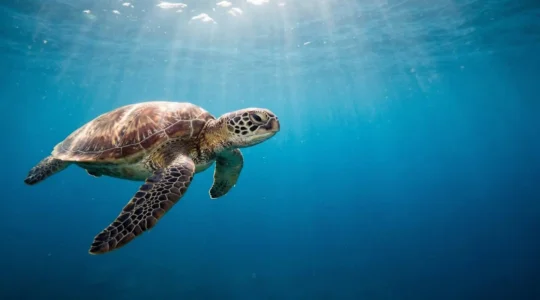
What to Do If a Green Sea Turtle Approaches You at El Puertito?
When a curious green sea turtle approaches you in the waters of El Puertito, the moment feels magical, but it demands a response rooted in respect, not instinct. The key…
Lire la suite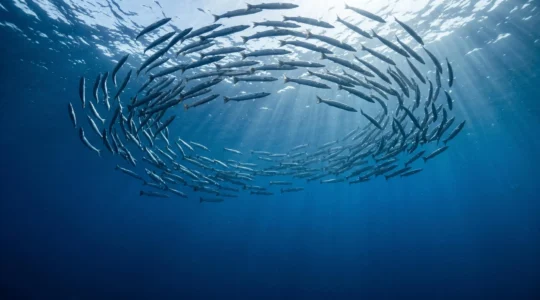
Where to Look in the Blue to Spot Passing Barracuda Shoals?
Tired of hearing about the shark everyone else saw? The problem isn’t your eyesight; it’s that you’re only looking at the reef. The secret to spotting big pelagics like barracuda…
Lire la suite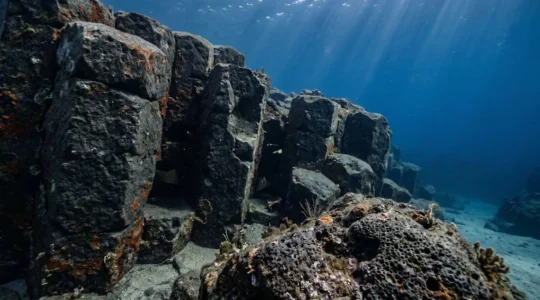
The Secrets in the Stone: What Hides in Basalt Rocks During the Day?
You stare at a wall of volcanic rock and see nothing but stone. But the reef isn’t empty; you’re just looking with the wrong eyes. The secret isn’t to look…
Lire la suite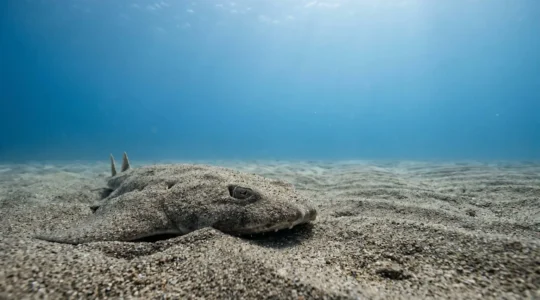
How to Spot Angel Sharks Buried in the Sandy Seabed Without Spooking Them?
The frustration of missing a perfectly camouflaged angel shark is familiar to many divers. The solution isn’t better eyesight, but a shift in mindset. This guide moves beyond simple ‘look…
Lire la suite