Diving equipment and accessories
Every diver knows that feeling: standing at the edge of the water, surrounded by gear that can seem intimidating at first glance. Yet behind each piece of equipment lies a specific purpose, designed to keep you safe, comfortable, and free to enjoy what lies beneath the surface. Understanding your diving equipment isn’t just about making purchases—it’s about building confidence in your ability to explore underwater environments across different conditions and destinations.
From the thermal protection that shields you from hypothermia in cold waters to the dive computer that monitors your gas mix and decompression limits, each component plays a vital role in your diving experience. Whether you’re planning tropical reef dives or exploring temperate wrecks, knowing how your gear works and why certain choices matter will transform how you approach every dive.
This comprehensive resource breaks down the essential categories of diving equipment, explaining not just what each piece does, but how to select, maintain, and use it effectively. We’ll explore the science behind thermal protection, demystify dive computer settings, and address the practical challenges that divers face when managing their gear across different environments.
Thermal Protection: The Foundation of Comfortable Diving
Water conducts heat away from your body approximately 25 times faster than air at the same temperature. This fundamental principle explains why even seemingly warm water can leave you shivering after extended exposure. Your thermal protection system—whether a wetsuit, semi-dry suit, or combination of layers—serves as your primary defense against heat loss and the fatigue that inevitably follows.
Semi-Dry Suits vs Wetsuit Systems
The choice between a semi-dry suit and a traditional wetsuit with additional layers represents one of the most important decisions for divers exploring waters below 24°C (75°F). Semi-dry suits feature specialized seals at the wrists, ankles, and neck, combined with waterproof zippers (typically T-Zip systems) that dramatically reduce water exchange. This design maintains a thin, stable layer of water against your skin that your body warms once and retains throughout the dive.
Traditional wetsuits, by contrast, allow continuous water circulation, requiring your body to constantly reheat new water flowing through the suit. Adding a hooded vest to a standard wetsuit can bridge some of this gap, providing extra torso insulation and head protection without the full investment of a semi-dry system. However, this combination still permits more water exchange than a properly sealed semi-dry suit, making it better suited for shorter dives or warmer conditions.
Hood Selection and Proper Fit
Your head and neck account for a disproportionate amount of total body heat loss—sometimes representing 40-50% of heat dissipation despite comprising only a small fraction of your surface area. This happens because your body prioritizes blood flow to the brain, pumping warm blood through vessels that lie close to the skin’s surface in your scalp and neck.
Hood design directly impacts both thermal protection and diving comfort. Bibbed hoods extend downward to overlap with your suit’s neck seal, creating a continuous thermal barrier that’s particularly effective with rental suits where neck seal compatibility is uncertain. Non-bibbed hoods rely on a perfect fit with your suit’s collar—excellent when properly matched, but vulnerable to gaps that allow cold water flushing.
Vented hoods address a different challenge: air trapping that can create buoyancy issues and make equalization difficult. Small vent holes at the crown allow expanding air to escape during ascent while still maintaining thermal protection. If you’ve experienced a tight hood pressing against your ears and making equalization uncomfortable, switching to a vented design or sizing up slightly can resolve the issue without sacrificing warmth.
Maintaining Your Thermal Protection
Even the best thermal protection fails if not properly maintained. T-Zip systems on semi-dry suits require regular care to prevent the leaks that can ruin a cold-water dive. After each dive day, rinse the zipper thoroughly with fresh water, ensuring no salt crystals or sand particles remain in the teeth. Apply zipper lubricant (typically paraffin-based wax) every few uses, working it into the teeth with a soft brush.
Inspect the zipper for any bent teeth or separation in the waterproof backing, as these small defects quickly worsen. Storage matters too: hang your suit from a proper hanger that supports the shoulders without stretching the neoprene, and keep the zipper partially open to prevent permanent compression of the waterproof seal.
Understanding Water Temperature and Heat Loss
Not all 20°C (68°F) water feels the same—a phenomenon that surprises many traveling divers. The Atlantic Ocean at 20°C often feels significantly colder than the Red Sea at the same temperature, despite identical thermometer readings. This difference stems from water density, salinity, and thermocline characteristics that affect how efficiently heat transfers from your body.
Atlantic waters typically have lower salinity and more pronounced thermoclines, creating pockets where temperature drops rapidly. You might descend through comfortable water only to hit a layer several degrees colder at depth. Red Sea waters, being more saline and stable, maintain more consistent temperatures throughout your dive profile. Additionally, current and wave action in Atlantic environments increase water circulation around your body, accelerating heat loss even when the ambient temperature seems moderate.
The second dive of the day presents its own thermal challenge in cold conditions. Even if you’ve dried and warmed up during your surface interval, your core body temperature may not have fully recovered from the first dive. Donning a still-damp suit (inevitable unless you have a backup) means starting the second dive with a thermal deficit. This cumulative effect explains why hypothermia risk increases on repetitive dives, even when individual dive times seem conservative.
Dive Computers: Your Underwater Safety Partner
Modern dive computers do far more than track depth and time—they actively monitor your gas mix, calculate tissue loading, and warn you about physiological limits. However, these sophisticated tools only protect you when configured correctly and interpreted properly.
Gas Mix Analysis and Configuration
The most dangerous assumption in diving is that your computer’s default settings match your actual breathing gas. Most computers ship with a default air setting (21% oxygen), and many divers never verify this before diving nitrox. This mismatch creates two equally serious risks: diving enriched air while your computer calculates air profiles (giving false no-decompression limits), or forgetting to reset your computer to air after a nitrox dive (unnecessarily limiting your next dive).
The solution requires discipline: personally analyze your gas mix before every dive, even when diving air, and immediately configure your computer to match. This habit takes perhaps 60 seconds but eliminates one of the most common causes of decompression illness in recreational nitrox diving. Your dive operator’s analysis isn’t sufficient—sensor drift, tank swaps, and human error all happen. Confirm the mix yourself, then set your computer before you touch any other gear.
Understanding Nitrox Limits and MOD Alarms
Enriched air nitrox expands your no-decompression limits, but it also introduces oxygen toxicity constraints that don’t exist when diving air. Every nitrox mix has a maximum operating depth (MOD) beyond which oxygen partial pressure exceeds safe limits. A tank of EAN32 (32% oxygen), for example, reaches its maximum partial pressure of 1.4 ATA at approximately 34 meters (111 feet).
Configuring your computer’s MOD alarm provides essential protection against exceeding these limits, especially on wall dives or when following a dive guide who may not know your gas mix. Set the alarm conservatively—at least 3-5 meters (10-15 feet) above the calculated MOD—to account for current-induced depth fluctuations and reaction time. The alarm should feel like a gentle reminder, not an emergency warning you’re constantly testing.
CNS Toxicity Monitoring
When your dive computer displays a CNS percentage or oxygen toxicity bar, it’s tracking cumulative oxygen exposure across your dive and surface intervals. This metric matters most on repetitive nitrox dives where individual exposures seem moderate but accumulate throughout the day. Recreational limits typically cap CNS exposure at 80% for single dives and recommend lower thresholds for multiple dives.
Understanding this warning means recognizing that oxygen toxicity, unlike nitrogen loading, presents immediate seizure risk rather than delayed decompression illness. If your computer shows CNS levels approaching 60-70% with more dives planned, consider switching to a leaner mix or reducing depth and time on subsequent dives. This is precisely the kind of real-time decision-making that separates confident, informed divers from those simply following instructions.
Practical Safety Considerations for Open Water
Equipment knowledge extends beyond the technical specifications to encompass the environmental challenges you’ll actually face. A tight hood compressing your ears doesn’t just cause discomfort—it can prevent proper equalization and lead to barotrauma. The solution often involves sizing up to a hood with slightly looser ear pockets, using a vented design, or learning to create small air channels by adjusting the hood’s position as you descend.
Similarly, the risk of jellyfish stings on exposed neck skin in certain open water environments makes the overlap between your hood and suit collar a safety consideration, not just a thermal one. In regions known for jellyfish populations, choosing a bibbed hood or ensuring complete neck coverage becomes part of your dive planning, much like checking current tables or weather forecasts.
The intersection of equipment choices and environmental conditions defines much of diving safety. Your semi-dry suit’s performance in tropical waters differs from its behavior in temperate seas. Your dive computer’s conservative settings might feel unnecessary on shallow reef dives but prove essential on square-profile wreck penetrations. Building equipment knowledge means understanding not just how each piece works, but when and why specific configurations matter for the diving you actually do.
Mastering your diving equipment transforms it from a source of anxiety into a set of reliable tools that expand your underwater possibilities. Each component—from the thermal protection that keeps you comfortable through multiple dives to the computer that monitors your physiological limits—serves a specific purpose rooted in physics and physiology. The divers who get the most from their equipment are those who invest time in understanding these purposes, maintaining their gear properly, and making informed choices based on actual diving conditions rather than assumptions or defaults.
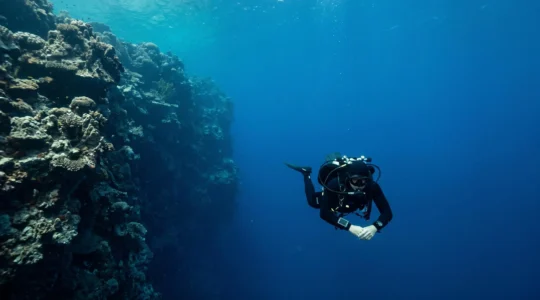
How to Set Your Dive Computer for EAN32 to Maximize Bottom Time
Correctly setting your dive computer for EAN32 is not just about entering ‘32%’; it’s about understanding the algorithmic dialogue between your gas, depth, and physiology to unlock more time underwater…
Lire la suite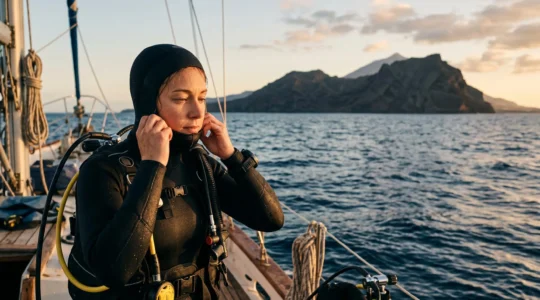
Why You Should Pack a Neoprene Hood Even for Summer Diving in Tenerife?
Packing a neoprene hood for summer in Tenerife isn’t about the surface temperature; it’s a strategic decision to manage cumulative ‘thermal debt’ and mitigate unseen risks. Even in warm water,…
Lire la suite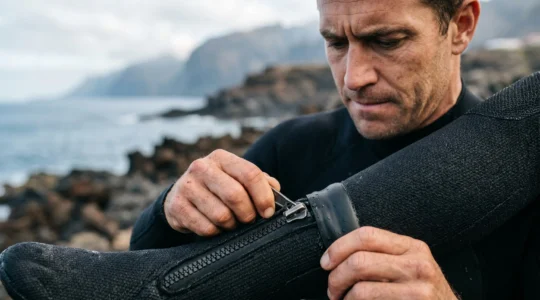
Is a 7mm Semi-Dry Suit Necessary for Tenerife Winters or Is 5mm Enough?
For a chilly diver, a 5mm suit paired with a hooded vest is more versatile and often more comfortable than a 7mm semi-dry for Tenerife’s winter. The key isn’t just…
Lire la suite