Blog
Tenerife stands apart from typical diving destinations. While other islands boast white sand and coral gardens, this Canary Island offers something entirely different: an underwater volcanic landscape shaped by ancient eruptions and sustained by Atlantic currents. Black sand slopes, basalt formations, and magnetic anomalies create unique challenges and rewards for divers willing to adapt their techniques.
Whether you’re positioning strobes against dark lava rocks, deciphering depth contours on sloping seabeds, or identifying invasive species threatening native ecosystems, diving Tenerife demands more than basic certification skills. This environment also calls for heightened environmental awareness, from understanding why September delivers the warmest water to recognizing how your buoyancy control directly impacts fragile marine life. Beyond the underwater realm, responsible diving here means confronting the sustainability challenges of island tourism, from water scarcity to carbon footprints.
This resource connects the technical, ecological, and ethical dimensions of diving Tenerife, giving you the foundational knowledge to explore these volcanic waters with confidence and respect.
Understanding Tenerife’s Unique Volcanic Underwater Landscape
Tenerife’s underwater topography tells a geological story millions of years in the making. Unlike destinations built on coral limestone, the seabed here consists of basalt and volcanic rock formations that create a dramatically different diving experience. The volcanic origin doesn’t just affect what you see—it fundamentally changes how light behaves underwater, how you navigate, and even what equipment precautions you must take.
Volcanic sand absorbs significantly more light than white sand found in tropical reef environments. This means your dive site will appear darker at the same depth, requiring photographers to adjust their approach entirely. The porous texture of basalt rocks also creates unique challenges: sharp edges can scratch dome ports if you’re not careful about your distance, and the irregular surfaces produce shadows that demand precise strobe positioning. These aren’t obstacles to avoid but characteristics to understand and work with.
The sloping seabed characteristic of volcanic islands creates natural depth contours that skilled navigators can use for orientation. However, the same volcanic minerals that built these formations can interfere with compass readings, making Tenerife’s magnetic environment something every diver needs to account for before descending.
Mastering Underwater Photography in Volcanic Conditions
Lighting Challenges With Dark Substrates
Photographing against black lava rocks requires a complete reconsideration of your lighting strategy. The light-absorbing properties of volcanic sand mean your standard exposure settings will produce underlit images. Successful photographers compensate by increasing strobe power or adjusting ISO settings, but they also learn to position strobes at angles that prevent harsh shadows while still illuminating the dark background adequately.
Choosing the Right Lens for Volcanic Drama
The wide-angle versus macro debate takes on new dimensions in Tenerife. Wide-angle lenses excel at capturing the dramatic scale of volcanic arches, caverns, and formations, especially when you time your dive to catch light beams penetrating through openings in the rock. Macro photography, meanwhile, reveals the unexpected: tiny invertebrates clinging to black basalt, creating stunning contrast. The choice often depends on the specific site and conditions rather than personal preference alone.
Equipment Protection Near Basalt
One equipment mistake costs more divers than any other in Tenerife: bringing dome ports too close to jagged basalt surfaces. The rock’s abrasive texture scratches acrylic and even glass ports with surprising ease. Maintaining awareness of your camera housing’s position in three-dimensional space becomes critical, particularly when currents push you closer to formations than intended.
Navigation Challenges in Tenerife’s Magnetic Environment
Standard navigation techniques require adaptation in Tenerife’s waters. The volcanic rock contains magnetic minerals that can cause compass readings to deviate from true north, creating false confidence in divers who trust their instruments without question. Compass calibration specific to Tenerife’s magnetic zone becomes essential before every dive series, not just once at the beginning of your trip.
Experienced divers develop alternative navigation strategies that reduce compass dependency:
- Reading depth contours along the sloping seabed to maintain orientation
- Interpreting sand ripples versus rock ridges to understand current direction and natural navigation markers
- Maintaining visual reference points to avoid drifting into the blue where spatial disorientation occurs rapidly
- Cross-referencing digital compass readings with natural features before trusting directional decisions
The danger of losing visual contact with the bottom in Tenerife’s deep blue water is real. Without the visual anchoring of a reef structure, divers can drift significant distances while believing they’re stationary, making the return to the boat or exit point unexpectedly difficult.
Atlantic Water Temperature: What Every Diver Should Know
Why Atlantic Cold Feels Different
Divers accustomed to Mediterranean conditions often underestimate how 19°C Atlantic water feels distinctly colder than the same temperature in other seas. The difference stems from current patterns, water density, and the psychological effect of diving in open ocean conditions versus enclosed seas. Your thermal protection needs adjustment accordingly—what worked in the Mediterranean may leave you shivering in Tenerife.
Predicting and Managing Thermoclines
Thermoclines in Tenerife can appear suddenly, dropping temperatures by several degrees within a meter of depth. Learning to predict their presence before entering the water—through briefings, local knowledge, and seasonal patterns—allows you to dress appropriately rather than discovering inadequate thermal protection at depth. The Gulf Stream’s influence keeps Tenerife diveable year-round, but conditions vary significantly by month, with September typically offering the warmest water of the annual cycle.
Surface Interval Considerations
The risk many divers overlook is wind chill during boat rides between sites or back to harbor. Your wetsuit may feel adequate underwater, but Atlantic winds against damp neoprene create rapid heat loss that can affect your comfort and even your safety during surface intervals. Bringing a windbreaker or changing into dry layers between dives prevents this often-underestimated problem.
Marine Biodiversity and Invasive Species Awareness
Tenerife’s position in the Atlantic creates a unique ecological situation. Ocean currents naturally bring exotic species to the Canaries, some of which establish populations and compete with native marine life. Understanding the difference between native and alien algae, recognizing invasive species, and knowing how to report sightings to databases like RedPROMAR turns recreational divers into citizen scientists contributing to marine conservation.
The presence of bearded fireworms exemplifies both the biodiversity and the risks of Tenerife’s waters. These creatures play ecological roles but pose real danger to divers who touch them, either accidentally or out of curiosity. Knowing how to identify them and treat contact injuries is practical knowledge every Tenerife diver should possess.
Eco-dive briefings increasingly include information about invasive populations and how divers can help monitor their spread without directly interfering. This participatory approach to marine ecology transforms diving from pure recreation into environmentally meaningful activity.
Protecting Marine Life Through Responsible Diving Practices
Understanding Stress Impacts on Marine Organisms
Human interaction creates measurable stress in sensitive marine life, even when divers believe they’re being careful. The physiological response of fish and invertebrates to diver presence can affect feeding, reproduction, and survival. This reality underpins the no-touch rule that eco-conscious operators enforce: many marine creatures have protective mucus layers that touching disrupts, creating vulnerability to infection and disease.
Buoyancy Control as Conservation Tool
Perfect buoyancy isn’t just about looking skilled—it’s about preventing crashes that damage marine life and substrate. Static observation without fin movement or hand stabilization requires genuine buoyancy mastery. The difference between competent and exceptional divers often appears in their ability to hover motionless while observing small creatures without creating turbulence or making contact.
Photography Ethics Underwater
Flash photography presents documented risks to nocturnal species, potentially disrupting hunting patterns and causing disorientation. Responsible underwater photographers learn to balance their desire for images with the welfare of their subjects, sometimes choosing to observe rather than photograph when conditions or species sensitivity demands restraint.
Sustainable Diving Tourism in Tenerife
Island environments face inherent sustainability challenges that diving tourists directly impact. Tenerife deals with water scarcity, making short showers after diving not merely a suggestion but a critical conservation behavior. The island’s infrastructure strains under tourism pressure, making every visitor’s choices meaningful.
Practical sustainability actions for diving tourists include:
- Using refill stations for drinking water instead of purchasing single-use plastic bottles
- Evaluating whether public transport (Titsa buses) can replace rental cars for reaching dive sites
- Choosing locally-made products and crafts over imported goods to support the real island economy
- Selecting dive operators that respect wildlife distances and demonstrate genuine environmental commitment
- Participating in carbon offset programs, including local ecological restoration projects like planting endemic species
Reducing your carbon footprint while diving Tenerife extends beyond equipment choices to fundamental travel decisions. Some divers now consider the environmental cost of flights and actively seek ways to offset their impact through participation in local conservation initiatives, turning their diving holiday into a net positive for the island’s ecology.
Understanding Tenerife’s unique diving environment—from its volcanic geology to its ecological challenges—transforms you from a visiting diver into an informed participant in this remarkable ecosystem. The technical skills you develop here, the species awareness you gain, and the sustainable practices you adopt create a foundation for responsible diving anywhere in the world.
The Pine Wood Balconies of Tenerife: Why Are They So Famous?
The enduring fame of Tenerife’s balconies is not just about beauty; it is a story carved directly into a remarkable material: the resin-rich heartwood of Canarian Tea Pine. This unique…
Lire la suite
How to Ensure Your Marine Encounters Don’t Harm the Animals
Even the most well-intentioned tourists can unknowingly stress or harm marine life. The key to truly responsible encounters isn’t just following rules, but understanding the unseen physiological impact of our…
Lire la suite
How the Atlantic Subtropical Currents Influence Water Temperature in February?
Expecting tropical warmth and getting a chilly surprise from the Atlantic is a common tourist experience, but it’s entirely predictable with a little ocean science. The water’s physical properties (thermal…
Lire la suite
Become a Guardian of Tenerife’s Reefs: A Diver’s Guide to Identifying and Reporting Key Invasive Species
The key to protecting Tenerife’s marine ecosystem isn’t just passive observation; it’s active participation by informed divers. Invasive species arrive via ocean currents and human activity, threatening native wildlife. Eco-conscious…
Lire la suite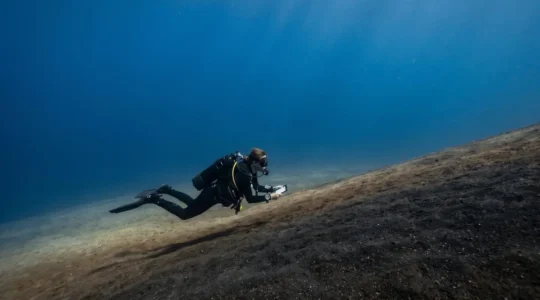
How to Use Natural Navigation on Tenerife’s Featureless Sandy Drop-Offs?
In summary: Your compass can be unreliable near Tenerife’s volcanic rocks; learn to identify and compensate for magnetic anomalies. Use consistent depth contours and sand ripple patterns as your primary…
Lire la suite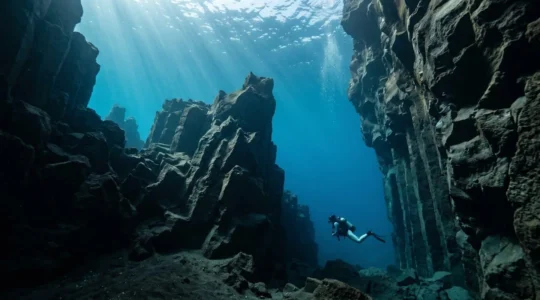
How to Photograph Tenerife’s Volcanic Seascapes Without Backscatter Ruining Your Shot?
The secret to clean volcanic seascape photos isn’t fighting backscatter with generic rules, but mastering light control in a uniquely dark environment. Strobe positioning is for sculpting texture on dark…
Lire la suite