Diving sites in Tenerife
Tenerife’s underwater topography tells the story of violent volcanic birth and gradual oceanic colonization. The same geological forces that sculpted Mount Teide—Spain’s highest peak—extended beneath the Atlantic, creating submerged lava fields, basalt columns, and labyrinthine cave systems that today rank among Europe’s most distinctive dive destinations. Unlike the soft coral gardens of tropical regions or the kelp forests of temperate coasts, Tenerife offers something fundamentally different: diving inside the architecture of a volcano.
The island’s dive sites cater to a broad spectrum of experience levels and interests. Shallow volcanic reefs transition into dramatic walls and arches, while purpose-sunk wrecks provide artificial habitats now flourishing with marine life. Some locations demand advanced certification and technical skills—deep air dives, overhead environments, strong current management—while others welcome newly certified divers exploring sloping basalt gardens in crystalline visibility.
This article introduces Tenerife’s key diving environments: the geological phenomena that shape them, the practical challenges they present, and the preparation required to dive them safely and successfully.
Volcanic Underwater Landscapes and Lava Formations
Tenerife’s volcanic origins are immediately visible underwater. The island’s relatively recent geological age means many formations remain sharp-edged and architecturally intact, unlike the smoothed, coral-encrusted structures found on older volcanic islands.
Basalt Columns and Hexagonal Rock Structures
When molten lava cools rapidly and contracts uniformly, it fractures into hexagonal columns—a geometric pattern driven by physics rather than biology. Underwater, these formations appear as bundled organ pipes or stacked prisms, sometimes standing vertical, sometimes collapsed into puzzle-piece rubble. The hexagonal shape results from tension equilibrium during cooling; six-sided cells minimize surface energy. Divers encounter these structures most commonly along drop-offs and in cavern walls, where erosion has exposed cross-sections of ancient lava flows. The visual effect is striking: nature achieving mechanical precision without tools or blueprint.
Lava Tunnels and Swim-Through Navigation
Hollow lava tubes form when a flow’s surface solidifies while molten rock continues moving beneath, eventually draining and leaving behind a tunnel. Many remain accessible to divers, though distinguishing safe swim-throughs from dead-ends requires observation before entry. Key indicators include: light visible at the far end, a smooth debris-free ceiling suggesting stable structure, and steady water flow indicating connectivity. Dead-ends typically show silt accumulation, stagnant water, and narrowing geometry. Propulsion technique matters critically here—the frog kick, with its deliberate glide phase and minimal downward thrust, prevents silt-outs that can reduce visibility to zero within seconds in confined spaces.
Essential Equipment for Cavern Environments
Even in caverns where ambient light remains visible, redundant illumination is non-negotiable. A primary torch failure in a lava tunnel transforms orientation and exit-finding from simple to potentially dangerous. The standard recommendation includes:
- Primary torch with burn time exceeding planned dive duration by 50%
- Two independent backup lights, each capable of illuminating the path to exit
- Battery check protocols before every dive involving overhead environments
Unlike open-water diving where a light failure is an inconvenience, in overhead environments it becomes a legitimate safety issue affecting navigation and buddy communication.
The Cathedral: Tenerife’s Iconic Deep Dive
The Cathedral—a large submerged cavern structure off Tenerife’s southwest coast—represents the island’s most celebrated and demanding recreational dive. Its appeal lies in dramatic architecture: a natural amphitheater of volcanic rock whose floor rests near 30 meters, with light filtering through openings in the roof to create cathedral-like illumination.
Physiological Challenges at Depth
At 30 meters, nitrogen narcosis affects most divers to varying degrees, and the enclosed, darker environment of the Cathedral can amplify subjective impairment. Reduced natural light means pupils dilate, task loading increases with navigation and buoyancy management in confined space, and the psychological effect of walls and ceiling overhead can heighten anxiety in susceptible divers. Narcosis doesn’t intensify physically in darkness, but the cumulative stress factors make clear-headed decision-making more challenging. Effective equalization during descent becomes critical—30 meters requires managing significant pressure changes, and any delay in equalizing can lead to barotrauma or force an aborted dive before reaching the feature you came to see.
Navigating the Arch and Wall Sections
The Cathedral’s interior divides into distinct zones. The arch area offers dramatic swim-throughs with ambient light penetration, suitable for photographers seeking natural illumination and silhouette opportunities. The wall section drops more steeply with less light, requiring artificial illumination to appreciate detail and presenting greater buoyancy challenges due to rapid depth changes. Many divers find the wall more demanding both technically and psychologically—proximity to rock, steeper angle, reduced visibility of the surface above, and the temptation to descend deeper than planned.
No-Decompression Limits and Gas Planning
At 30 meters on air, recreational no-decompression limits range from 15 to 20 minutes depending on dive table or computer algorithm. Exploring the Cathedral’s floor and features can easily consume this time, creating pressure to ascend before fully experiencing the site. Divers certified for enriched air nitrox (typically EAN32 or EAN36) can extend bottom time significantly—EAN32 at 30 meters offers roughly 25 minutes, while EAN36 provides around 35 minutes. This additional time transforms the dive from rushed to comfortably paced, though maximum operating depth for EAN36 limits deeper exploration beyond the main Cathedral structure.
Underwater Photography in Amphitheater Structures
The Cathedral and similar cavern sites present unique photographic opportunities and challenges. The combination of natural light shafts, massive scale, and textured volcanic surfaces creates compelling imagery, but requires specific technical approaches.
Harsh shadows plague photographers in these environments. A single point light source—whether sunlight penetrating from above or a diver’s torch—creates extreme contrast between illuminated areas and complete darkness. The solution involves either positioning subjects within the naturally lit zones (limiting creative options) or using multiple light sources strategically placed to fill shadows without eliminating dimensional modeling. Positioning divers within the frame provides essential scale reference; without a human element, even massive rock formations can appear ambiguous in size. A diver silhouetted in an archway or ascending through a light shaft immediately communicates dimension and creates narrative interest.
Lens choice significantly impacts results. Fisheye lenses (typically 8-15mm equivalent) capture the full sweep of large structures in single frames but introduce dramatic barrel distortion, bending straight lines into curves. Rectilinear wide-angle lenses (16-24mm equivalent) preserve architectural geometry better but require greater working distance to frame large subjects—sometimes impossible in confined spaces. Compact camera users face additional choices regarding wet lenses that attach to the exterior housing port, with each optical design trading field of view against edge sharpness and chromatic aberration control.
The significant risk of losing buddy contact while concentrating on camera settings, composition, and lighting has ended many dives prematurely and caused genuine safety incidents. Photographers must develop discipline around regular buddy checks, pre-established signals for regrouping, and recognizing when photographic ambition conflicts with safe diving practices. The gloom of deep cavern environments makes visual separation happen faster and reunion more difficult than in open water.
El Condesito Wreck: Diving a Deteriorating Cargo Ship
El Condesito, a cargo vessel resting near Palm-Mar, offers Tenerife’s primary wreck diving experience. Unlike deliberately scuttled dive attractions prepared for safe penetration, this wreck is degrading naturally, with structural integrity declining measurably in recent years.
The vessel’s iron hull is succumbing to oxidation and mechanical stress. Storms and surge flex the structure, opening seams and collapsing weakened sections. What was once safely navigable interior space gradually becomes hazardous as sharp metal ribs protrude, deck plates shift, and hanging cables multiply. Divers must adapt their movement patterns near exposed rusty metal—traditional flutter kicks create downward thrust that can push a diver into jagged edges below, while modified frog kicks and precise buoyancy control maintain safe clearance. Hose routing requires special attention; the same structural deterioration that creates visual interest also creates multiple snagging points for regulators, SPGs, and alternate air sources.
The engine room retains much of its recognizable machinery—pumps, pipes, gauges—though increasingly obscured by rust scale and marine growth. The cargo hold has opened to the elements, with hull plates partially collapsed, making the distinction between interior and exterior spaces increasingly blurred. Both areas attract substantial fish populations, particularly schools of barracuda and resident groupers using the wreck as artificial reef habitat.
El Condesito’s location on an exposed point subjects it to current conditions that vary with tide and swell direction. Diving during slack periods between tidal changes offers the calmest conditions, while strong currents during peak flow can make approaches difficult and air consumption rates unsustainable for adequate exploration time. Local dive operators typically monitor conditions and schedule trips accordingly, but independent divers should consult tide tables and observe surface conditions before committing.
Montaña Amarilla: The Independent Diver’s Paradise
Montaña Amarilla— »YellowMountain »—combines accessible shore entry, diverse topography, and freedom from mandatory guide requirements, making it especially popular among experienced divers seeking autonomy. The site’s appeal to independent divers stems from straightforward logistics and forgiving conditions rather than dramatic features.
Entry and exit involve negotiating volcanic rock steps that become treacherously slippery when wet—a paradox since they’re always wet near the water line. Divers typically kit up in the staging area, shuffle carefully to the entry point in full gear, and perform a controlled sitting entry or careful stride from the lowest suitable platform. Exit timing matters: attempting to climb out during surge periods risks being knocked back against rock or losing footing on slick surfaces. Watching for lulls in wave sets and using a buddy-assist system for gear removal significantly reduces incident risk.
For divers who own equipment, the decision between renting tanks locally versus traveling with tanks involves weighing rental costs against hassle and potential complications. Tenerife has several dive shops offering tank fills and rentals, with pricing generally competitive. Independent divers need to verify valve types (DIN vs. yoke), available gas mixes (air vs. nitrox), and whether proof of certification is required for nitrox fills. Logistics become more complex for divers planning multiple daily dives across different sites—tank rental with delivery might prove more practical than coordinating fills between locations.
Tide cycles affect not just entry and exit conditions but actual accessibility. At extreme low tide, the entry/exit area becomes easily negotiable but exposed rock platforms can trap divers who surface after the tide rises, blocking safe exit routes until the next low period. Understanding tide patterns for the specific date prevents extended surface waits in full exposure gear or forced long surface swims to alternative exit points. Weekend crowds at Montaña Amarilla peak dramatically compared to weekday visits—the combination of limited parking, shared entry/exit points, and diver congestion underwater can transform a relaxed dive into a patience-testing experience. Divers seeking solitude typically schedule weekday morning visits.
Preparing for Tenerife’s Dive Environments
Tenerife’s signature dives share common demands: good buoyancy control for navigating vertical topography, comfort with modest depth (most premier sites involve 25-35 meter ranges), and mental preparation for environments that feel different from open-water training sites. Divers accustomed exclusively to shallow reef diving may find the sensory experience of deep caverns, enclosed spaces, and complex three-dimensional navigation initially challenging.
Certification requirements vary by site and whether diving independently or with operators. The Cathedral typically requires Advanced Open Water or equivalent, with many operators preferring divers have deep and navigation specialty experience. Wreck diving without penetration generally accepts Open Water certification, though wreck specialty training significantly improves safety awareness and enjoyment. Shore diving at sites like Montaña Amarilla carries no formal certification requirements beyond basic Open Water, but demands self-sufficiency in equipment management, dive planning, and problem-solving without immediate professional support.
Seasonal considerations affect conditions modestly—Tenerife’s subtropical latitude maintains relatively stable water temperatures year-round (ranging from roughly 18°C in late winter to 24°C in autumn), but winter months bring increased probability of weather disruptions affecting boat operations and shore conditions. Visibility typically improves in summer months, though exceptions occur based on localized conditions and plankton blooms.
The volcanic underwater landscapes of Tenerife reward preparation, respect for environmental demands, and honest self-assessment of skills and limitations. Whether exploring hexagonal basalt formations in shallow lava fields, descending into the Cathedral’s amphitheater, documenting the slow decay of El Condesito, or enjoying the autonomy of Montaña Amarilla, these sites offer experiences fundamentally shaped by their volcanic origins—experiences available nowhere else in European waters.
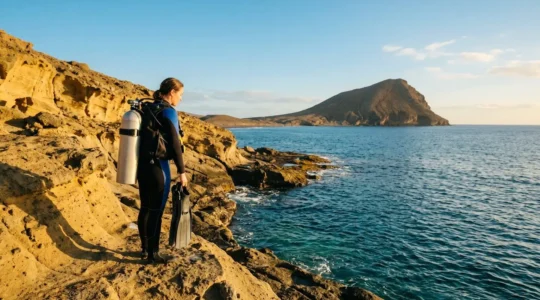
How to Plan a DIY Shore Dive at Montaña Amarilla for Under €20?
A sub-€20 dive at Montaña Amarilla is absolutely achievable, but it’s a victory of logistics and timing, not a simple purchase. The core cost is a single air fill (€5-€8),…
Lire la suite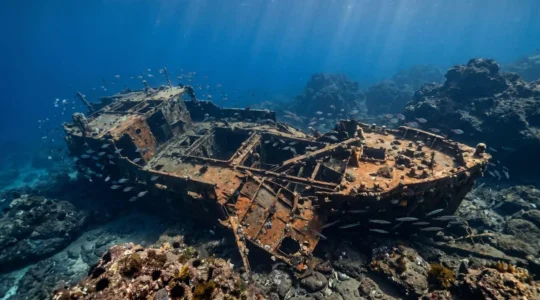
How to Safely Explore the El Condesito Wreck Given Its Current Deterioration?
Diving the El Condesito is no longer a simple wreck visit; it’s an exercise in assessing a structure in active collapse, where historical knowledge is less valuable than real-time observation….
Lire la suite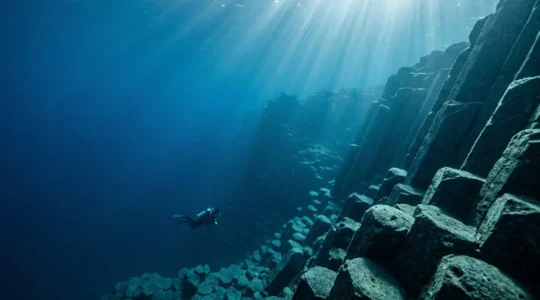
Capturing the Scale of the Submarine Amphitheater: Lens Choices for Compact Cameras
Capturing the true scale of a submarine amphitheater isn’t about having the widest lens, but mastering the art of sculpting space with light and perspective. Choose your lens based on…
Lire la suite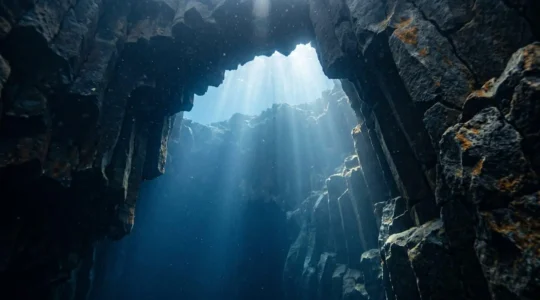
The Cathedral Reef: A Deep Dive into Suitability for Divers with Under 20 Logs
The Cathedral is not just a deep dive; it’s a test of mental fortitude that certifications alone do not prepare a novice diver for. Psychological pressures like darkness and overhead…
Lire la suite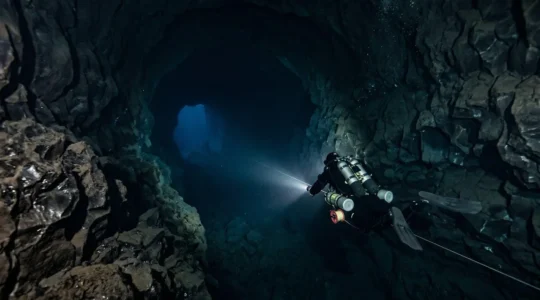
Navigating Tenerife’s Lava Tubes: Safety Protocols for Recreational Divers
In summary: Successful lava tube diving is not about bravery, but about rigorous adherence to specific protocols for propulsion, navigation, and equipment. Mastering specialized finning techniques like the frog kick…
Lire la suite