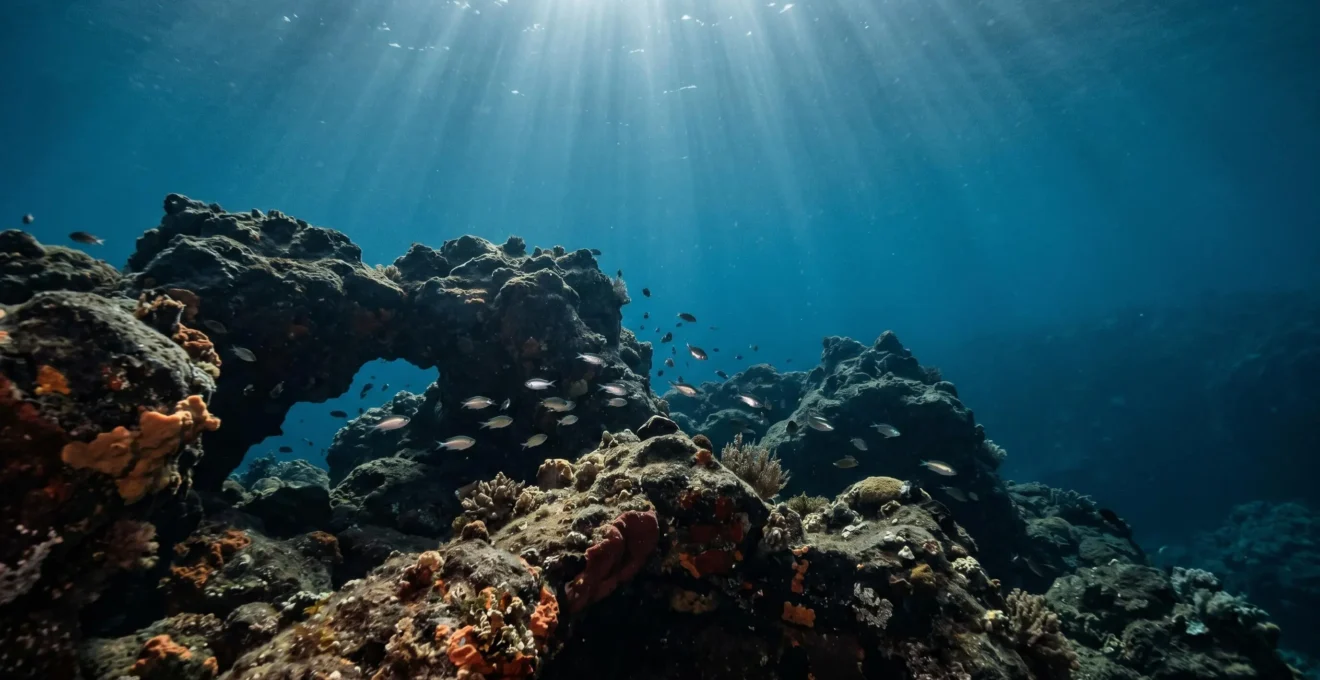
The key to protecting Tenerife’s marine ecosystem isn’t just passive observation; it’s active participation by informed divers.
- Invasive species arrive via ocean currents and human activity, threatening native wildlife.
- Eco-conscious divers can become effective citizen scientists by learning to identify, document, and report key threats like invasive algae and fireworms.
Recommendation: Use the specific protocols in this guide to report sightings to platforms like RedPROMAR and adopt strict biosecurity measures to prevent spreading non-native species between dive sites.
For the eco-conscious diver, there’s a unique thrill in exploring Tenerife’s volcanic underwater landscapes. It’s a world of vibrant native species. But sometimes, you see something that feels… out of place. An unfamiliar patch of algae spreading rapidly, or a creature you haven’t seen in the guidebooks. The common advice is simple: « look but don’t touch. » While wise, this passive approach is no longer enough to protect the delicate balance of the Canary Islands’ marine environment.
The truth is, a new wave of threats is arriving, not just on the tides, but through global maritime traffic. These invasive species are outcompeting native life and altering the ecosystem you love. But what if the solution wasn’t just to observe, but to act? What if every certified diver could become a frontline defender of this precious environment? This is not about being a tourist anymore; it’s about becoming a citizen scientist.
This guide moves beyond generic warnings. It’s built to empower you, the responsible diver, with the knowledge and tools to make a tangible difference. We will explore the mechanisms that bring these aliens to Canarian shores, but more importantly, we will equip you with the practical skills to identify key threats, report your sightings with scientific accuracy, and adopt a code of conduct that actively safeguards Tenerife’s underwater world for generations to come. Your dives are about to become a powerful tool for conservation.
To help you navigate this mission, this article is structured to build your expertise from understanding the problem to implementing the solution. Below is a summary of the key areas we will cover, turning your underwater observations into meaningful conservation action.
Summary: A Diver’s Manual to Countering Marine Invasive Species in Tenerife
- Why Ocean Currents Bring Exotic Species to the Canaries?
- How to Report Sightings to Local Databases Like RedPROMAR?
- Native vs Alien Algae: How to Spot the Threat on the Reef?
- The Risk of Touching Bearded Fireworms and How to Treat It
- How Eco-Dive Briefings Can Help Control Invasive Populations?
- Why Are Certain Coastal Zones Off-Limits to Recreational Divers?
- Why You Should Send Back Undersized Fish at the Restaurant?
- Diving in Tenerife’s Protected Zones: The Rules Every UK Diver Must Follow to Avoid Fines
Why Ocean Currents Bring Exotic Species to the Canaries?
The Canary Islands’ unique position in the Atlantic makes them a crossroads not just for sailors, but for marine life. The primary driver of this biological traffic is the Canary Current, a broad, south-flowing river within the ocean. While it brings the cooler, nutrient-rich waters that fuel the local ecosystem, it also acts as a conveyor belt for larvae and floating organisms from distant shores, including the Iberian Peninsula and the African coast. The current itself moves at a significant pace, with speeds often ranging between 0.1 to 0.5 m/s, allowing small organisms to travel vast distances.
However, the real key to colonization lies in the complex oceanographic structures that form around the islands. Research has shown that mesoscale features like cyclonic and anticyclonic eddies act as natural « larval traps. » Instead of being swept past the islands into the open ocean, larvae get caught in these swirling bodies of water. These eddies can concentrate larvae from different origins, creating a potent mix of native and non-native species in one location. This retention mechanism prevents their dispersal and significantly increases the chance that a foreign species will find a suitable habitat to settle, grow, and establish a new population, disrupting the native ecosystem.
This natural process turns the waters around Tenerife into a constant potential entry point for new species. Understanding this mechanism is the first step for any citizen scientist; it’s not about blaming nature, but recognizing the inherent vulnerability of the island’s ecosystem, a vulnerability now dangerously amplified by human maritime activity.
How to Report Sightings to Local Databases Like RedPROMAR?
Spotting a potential invasive species is an important first step, but that observation only becomes powerful when it is shared with scientists who can track and manage these threats. In the Canary Islands, the primary platform for this is RedPROMAR (Red de Observadores del Medio Marino en Canarias). This citizen science network relies on divers, fishermen, and ocean lovers to act as its eyes under the water. Submitting a report is not just about sending a photo; it’s about providing high-quality data that can be used for scientific analysis and policy-making.
To ensure your report is valuable, it needs to be as detailed and accurate as possible. This means your dive needs to shift from a passive viewing experience to an active data collection mission. Before you even surface, you should be documenting key information on a waterproof slate. The goal is to provide a complete snapshot of the encounter: what you saw, where you saw it, and in what context. A clear, well-documented sighting is infinitely more valuable than a vague « I saw a weird fish. »
This level of documentation might seem technical, but it’s what separates a casual observation from a scientifically valid data point. The following checklist outlines the exact information that researchers at RedPROMAR need to validate a sighting and add it to their database, making your contribution a genuine part of marine conservation efforts in Tenerife.
Your Action Plan: Pre-Reporting Checklist for RedPROMAR
- Note the precise depth where the species was observed and record on a waterproof slate.
- Identify the substrate type (e.g., rocky, sandy, volcanic) and the environmental context.
- Estimate the quantity of organisms observed (a single individual or an approximate count of an aggregation).
- Observe and document any notable behavior patterns, such as feeding, resting, or defensive postures.
- Capture clear photos, ideally including a side profile view and an object for scale if possible without disturbance.
- Record GPS coordinates or, if not possible, use recognizable dive site landmarks for accurate location.
By following this protocol, you transform your dive into a vital monitoring survey. Your data, combined with hundreds of other reports, helps scientists map the spread of invasive species and develop effective management strategies. Your role as a citizen scientist becomes real and impactful.
Native vs Alien Algae: How to Spot the Threat on the Reef?
Not all threats have fins or claws. Some of the most insidious invaders are algae. While a healthy reef has a diverse tapestry of native seaweeds, invasive algae often form dense, uniform monocultures that smother everything in their path. Differentiating between a native bloom and an alien takeover requires a trained eye. One key invader to watch for in Tenerife is Halimeda incrassata, a green calcareous alga that can form dense meadows, especially in areas with lower wave energy. While native to other parts of the world, its establishment here alters the local habitat.
According to a study on its settlement patterns, Tenerife’s conditions are quite favorable for this species, and its spread shows different characteristics than in the Mediterranean, highlighting how local conditions influence an invasion. Your role as a diver is to spot the warning signs of such a takeover. This isn’t about knowing every single species, but about recognizing patterns of unhealthy change on the reef.
To become effective at this, you need to look for visual cues that indicate an aggressive, non-native species is at work. These are signs of ecological warfare happening in slow motion on the reef floor.
Learning to spot these signs of stress and competition is a critical citizen science skill. Keep an eye out for the following indicators during your dives:
- The « Halo Effect »: Look for bleached or dead zones around a patch of algae. This indicates the algae may be releasing chemicals to kill its competitors.
- Unnatural Textures: Invasive species often create unusual textures, like a bristly carpet or a smooth, plastic-like blanket that looks out of place among native forms.
- Missing Natives: Note areas that seem barren of the usual sensitive species, like certain sponges or coralline algae. Their absence can be a sign that an invasive alga has already pushed them out.
- Rapid Growth: If you dive the same site regularly, take note of algae patches that seem to expand dramatically between dives. This rapid growth is a hallmark of many invasive species.
- Monoculture Dominance: The most obvious sign is a large, dense patch of a single type of algae that has replaced a previously diverse area.
The Risk of Touching Bearded Fireworms and How to Treat It
The Bearded Fireworm (Hermodice carunculata) is a visually striking, caterpillar-like creature often seen crawling on the reefs. While native to the Atlantic, its populations appear to be increasing, and it poses a direct risk to incautious divers. Its name is not an exaggeration. The body is lined with clusters of white, hollow bristles that are filled with a potent neurotoxin. These are not for show; they are a formidable defense mechanism.
The MarineBio Conservation Society highlights the worm’s defensive behavior, stating: « When disturbed, the worm flares out the bristles so they are more exposed. » This is a clear warning sign. Even incidental contact can cause the bristles to break off in the skin, delivering a painful sting characterized by an intense burning sensation, inflammation, and numbness that can last for hours. The worms themselves can be surprisingly large, with research indicating a typical length of 7-10 cm, but they can grow much larger.
Knowing how to react if you or your buddy is stung is a critical piece of diver safety. The wrong response, such as rubbing the area, will only make the situation worse by breaking the bristles and embedding them deeper into the tissue. Proper first aid is about systematically removing the bristles and neutralizing the venom. Every diver in Tenerife should be familiar with this evidence-based protocol.
- Remove with Tape: Immediately apply adhesive tape (like duct tape) to the affected area and peel it off to pull out the fine, embedded bristles.
- Neutralize the Venom: Apply isopropyl alcohol or vinegar to the wound. This helps to break down the venom and can reduce the burning sensation.
- Remove Visible Fragments: Use tweezers to carefully remove any larger, visible bristle fragments that remain in the skin.
- Do Not Rub: Avoid rubbing, scratching, or applying fresh water initially, as this can spread the venom and push the bristles deeper.
- Monitor Symptoms: Watch for any systemic symptoms like nausea, dizziness, or shortness of breath, which are rare but require immediate professional medical attention.
- Expect Lingering Pain: Be aware that a painful tingling or burning sensation may persist for several hours even after treatment.
How Eco-Dive Briefings Can Help Control Invasive Populations?
The fight against invasive species begins before you even hit the water. The pre-dive briefing is one of the most powerful and underutilized tools in a dive center’s conservation arsenal. A standard briefing covers safety and points of interest, but an « eco-dive briefing » goes further. It transforms a group of recreational divers into a coordinated team of citizen scientists for the duration of the dive. It sets the mission: to not only enjoy the reef but to actively help monitor its health.
An effective eco-briefing should clearly identify one or two target invasive species for that specific dive site. It should use clear photos and identification guides to show divers exactly what to look for—and what to distinguish it from. It reinforces the reporting protocol, ensuring every diver knows how to document a sighting. Crucially, it also covers biosecurity: the practical steps every diver must take to avoid accidentally becoming a vector for spreading invasive species themselves.
One of the most critical parts of this is post-dive gear decontamination. Microscopic larvae and algae spores can easily hitch a ride on a BCD, wetsuit, or fins. Moving from one dive site to another without thorough cleaning can introduce an invasive species to a new, vulnerable area. A responsible eco-briefing will not just mention this; it will detail the exact procedure and explain why it is so important, creating a culture of shared responsibility. This is a core part of your personal biosecurity protocol.
Your post-dive routine should include the following steps to prevent inter-site species transport:
- Rinse all equipment thoroughly with fresh water immediately after the dive.
- Pay special attention to pockets, webbing, and velcro where organisms can hide.
- Soak wetsuits and neoprene accessories in fresh water for at least 30 minutes.
- Carefully inspect and clean fin straps, mask skirts, and other small crevices.
- Allow all gear to dry completely, preferably in direct sunlight, before using it at a different location.
- If possible, use separate equipment bags for different regions to minimize cross-contamination risk.
Why Are Certain Coastal Zones Off-Limits to Recreational Divers?
To the recreational diver, a sign declaring a coastal area « off-limits » can feel like a frustrating restriction. However, these zones are not arbitrary. They are essential tools for marine management and conservation, serving multiple critical purposes. Some are designated to protect fragile breeding grounds or sensitive habitats from physical disturbance. Others, however, play a more strategic role in the fight against invasive species: they serve as ecological baselines.
By keeping these areas free from the constant traffic of boats and divers, scientists can get a clearer picture of the natural state of the ecosystem. When an invasive species appears, its presence and spread in a protected, « undisturbed » zone provides invaluable data on its behavior without the complicating factors of human activity. These zones become our control group in a massive, real-world experiment. They help answer the question: « How does this invader spread on its own? »
Case Study: Tracking the Invasive Ascidian Cnemidocarpa irene
The power of this approach is perfectly illustrated by the tracking of the invasive sea squirt, Cnemidocarpa irene. First reported in Tenerife in 2018 through the RedPROMAR platform, initial sightings were clustered around the major port of Santa Cruz. An article in the Aquatic Invasions Journal details how citizen science observations allowed researchers to track its spread from this entry point. The data showed a clear progression: from the northeast in 2018-2019, down the eastern coasts, and eventually reaching the south and west by 2023-2024. This detailed mapping, made possible by comparing its appearance in both high-traffic and protected zones, confirmed that large ports act as primary hotspots for introductions.
As the journal’s authors note, « These movements imply that large ports, particularly those receiving oil platforms, are hotspots for non-indigenous species. » Respecting the boundaries of these off-limits zones is therefore a direct contribution to conservation science. It ensures that these vital monitoring areas remain effective, allowing scientists to understand the dynamics of invasion and develop strategies to protect the rest of the island’s coastline.
Why You Should Send Back Undersized Fish at the Restaurant?
Your role as a guardian of Tenerife’s reefs doesn’t end when you take off your BCD. It extends to the choices you make on land, particularly at the dinner table. A common sight in some coastal restaurants is a platter of « fritura mixta » or grilled fish, often including individuals that are clearly too small. Ordering or accepting these dishes creates a direct economic incentive for fishers to catch and sell undersized, juvenile fish, which has a devastating impact on the marine ecosystem.
A healthy fish population relies on individuals reaching sexual maturity and having the chance to reproduce. Catching juvenile fish before they have had a chance to spawn is like chopping a forest down before the trees can produce seeds. It systematically removes the next generation, leading to a rapid decline in fish stocks. This not only harms the fishery but also disrupts the entire food web. Fewer prey fish means less food for larger predators like groupers, barracudas, and even dolphins.
Furthermore, this pressure on native fish stocks can indirectly benefit invasive species. When native populations are weakened by overfishing of their young, it leaves a gap in the ecosystem. This empty niche provides an opportunity for more resilient and faster-growing invasive species to move in and take over, a problem that conservation assessments in Tenerife show is a growing concern. Politely questioning or sending back a plate of undersized fish is a powerful consumer action. It sends a clear message to the restaurant and its suppliers that you support sustainable practices. It creates a « chain of responsibility » that starts with your choice and helps protect the very ecosystem you travel to enjoy.
Key takeaways
- Become an active observer: Learn to identify the key invasive algae and fauna in Tenerife.
- Document with purpose: Follow the RedPROMAR checklist to ensure your sightings become valuable scientific data.
- Practice strict biosecurity: Thoroughly clean and dry all gear between dives to prevent spreading microscopic invaders.
- Extend your impact to land: Make sustainable seafood choices and reject undersized fish to protect native populations.
Diving in Tenerife’s Protected Zones: The Rules Every UK Diver Must Follow to Avoid Fines
For UK divers traveling to Tenerife, understanding and respecting local regulations is not just about avoiding fines; it’s about being a welcome guest in a fragile environment. The rules governing Marine Protected Areas (MPAs) and general diving conduct are designed with a singular goal: to minimize human impact and preserve the ecosystem for the future. These efforts are part of a wider movement, with international conservation commitments aiming to protect 30% of the ocean by 2030.
Your participation is not optional. As a visiting diver, you are expected to operate as a temporary steward of these waters. This means adhering to a strict biosecurity protocol from the moment you pack your gear in the UK to your final dive in Canarian waters. It means understanding that rules like « no gloves » aren’t arbitrary; they are scientifically-backed measures to prevent the transfer of tiny organisms between surfaces. It means choosing operators who are legally registered and demonstrably committed to conservation.
Think of the following points not as a list of restrictions, but as your code of conduct as an ambassador for responsible diving. Adhering to them demonstrates your respect for the local environment and your commitment to being part of the solution, not the problem.
- Pre-Travel Biosecurity: Ensure all personal dive gear arriving from the UK is thoroughly cleaned and completely dry before you pack it. This is your first line of defense against introducing non-native species.
- Choose Registered Operators: Before booking, verify that your chosen dive center holds the required permits and insurances with the Canary Islands Tourism Board. This ensures they are accountable and operating legally.
- Respect All Boundaries: Strictly follow depth restrictions and designated entry/exit points in MPAs. These are designed to protect sensitive benthic communities from disturbance.
- Zero Contact Rule: The rule is simple: do not touch, harass, or disturb any marine life. Physical contact stresses organisms and can facilitate the transmission of diseases.
- Understand the « No-Glove » Policy: In many protected zones, gloves are prohibited. This is to reduce the temptation to touch and to minimize the transfer of microscopic invasive spores.
- Follow Your Guide: Trust your local dive guide. They are trained to know the specific rules and sensitive areas of each site. Following their lead is the best way to ensure a safe and low-impact dive.
By embracing the role of a citizen scientist and adhering to these principles of responsible diving, you do more than just witness the beauty of Tenerife’s underwater world—you become an active and vital part of its protection. Start applying these practices on your very next dive.