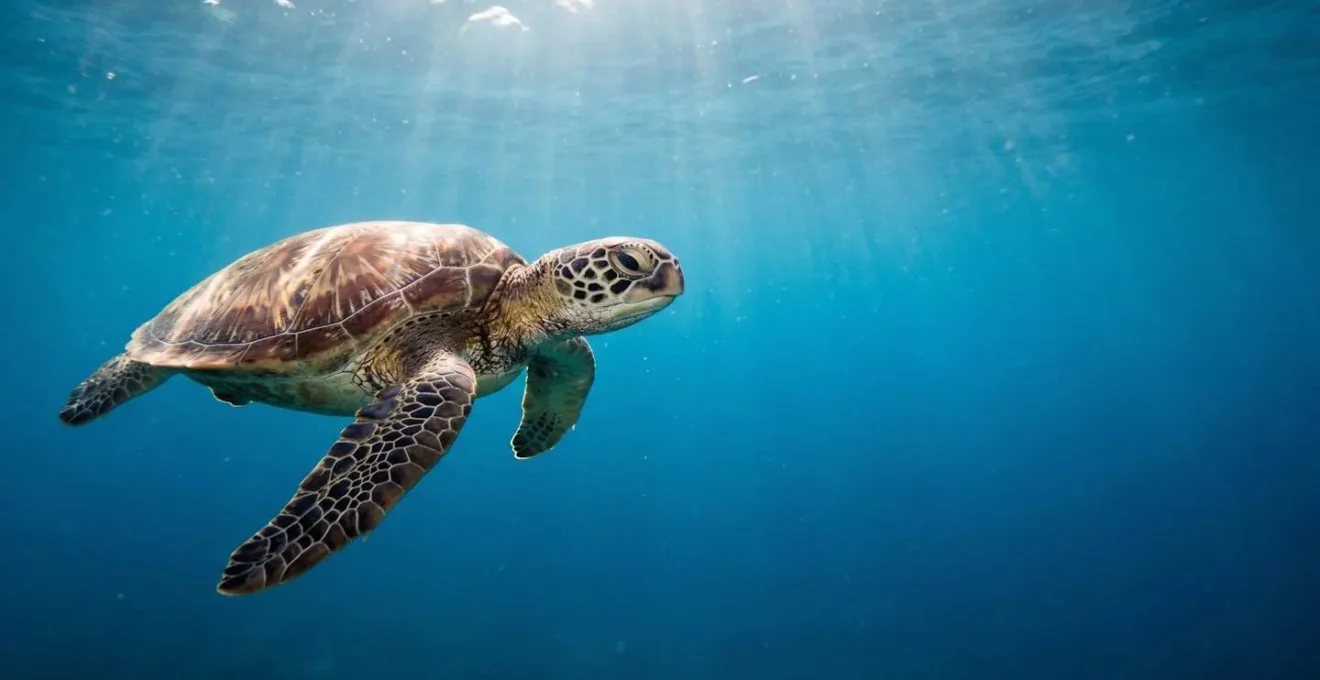
When a curious green sea turtle approaches you in the waters of El Puertito, the moment feels magical, but it demands a response rooted in respect, not instinct. The key is to practice passive observation. Instead of reaching out or swimming away in a panic, your role is to become a calm, non-threatening part of the environment. This guide explains the critical reasons behind this protocol, from the turtle’s physical fragility to the severe legal penalties for interference, ensuring your encounter protects both you and these ancient mariners.
It’s a moment every diver and snorkeler dreams of in Tenerife. You’re floating in the calm, clear waters of El Puertito, and a majestic green sea turtle glides into view. It doesn’t flee; instead, it turns and begins to swim directly towards you. Your heart pounds. The instinct to reach out, to connect, is powerful. But this is the single most critical moment of your interaction, the one that defines whether your encounter is one of respect or one of harm. Many visitors believe the primary rule is simply « don’t touch, » but this barely scratches the surface. True stewardship of these wild animals goes far beyond a single action.
As a guardian of these waters, I see the common misconceptions daily. People think a turtle’s shell is an impenetrable shield or that their curiosity is an invitation for interaction. The reality is far more complex and delicate. But what if the key to a truly memorable encounter wasn’t about getting closer, but about understanding how to give them space in a way that builds trust? What if your stillness and calm observation were the greatest gifts you could offer?
This guide is designed to move you from a passive tourist to an active steward of the marine world. We will explore the hidden vulnerabilities of these curious creatures and the precise, calm actions you should take when one gets close. We’ll delve into the serious health issues affecting them, the strict laws protecting them in Spain, and how your choices, even before you enter the water, shape the future of this fragile ecosystem. This is your briefing for becoming the kind of visitor the turtles don’t need to fear.
Summary: Your Guide to Respectful Turtle Encounters in Tenerife
- Why Green Turtles Are Curious But Physically Fragile?
- How to Back Away Slowly When a Turtle Gets Too Close?
- Fibropapillomatosis: What Are Those Tumors You See on Some Turtles?
- The Heavy Fines for Harassing Protected Marine Reptiles in Spain
- When to Be Extra Careful During Turtle Nesting Season?
- How to Observe Stingrays Naturally Without Baiting Them?
- The Fine for Touching Protected Species That Could Cost You €3,000
- Diving in Tenerife’s Protected Zones: The Rules Every UK Diver Must Follow to Avoid Fines
Why Green Turtles Are Curious But Physically Fragile?
The green turtles of El Puertito are known for their inquisitive nature. They’ve grown accustomed to the presence of swimmers and may approach out of simple curiosity. However, it’s a grave mistake to interpret this curiosity as a sign of resilience. These creatures are far more fragile than they appear. Their apparent robustness hides a significant bio-vulnerability that makes human interaction fraught with risk. Their skin and shell are not inert armour; they are living tissue covered in a protective biofilm that can be easily damaged by a simple touch, potentially transferring harmful bacteria and pathogens from our hands to them.
Furthermore, their curiosity can be a double-edged sword in an environment polluted by human activity. They are naturally drawn to investigating floating objects, which tragically includes plastics and other debris. In fact, the problem is pervasive; a startling 2016 study from the University of Tokyo revealed that 100% of green turtles studied had ingested artificial debris. When you are in their environment, your presence is just another element they might investigate. Your responsibility is to ensure that your interaction doesn’t add to the long list of human-caused threats they already face.
As the World Atlas Marine Biology Research Team highlights, their populations are under immense pressure. This is a critical context to remember when one approaches you.
Sea turtle populations are increasingly threatened by coastal development, artificial lighting, plastic pollution, climate change, overharvesting, and entanglement in fishing gear, with human activity being the leading cause of these threats.
– World Atlas Marine Biology Research Team, Sea Turtle Conservation Status Report
This fragility is precisely why a strict code of conduct is not just a suggestion but a necessity for their survival. Your encounter is a brief moment in your life, but it can have lasting consequences for theirs. Understanding their physical vulnerability is the first step toward a truly respectful interaction.
How to Back Away Slowly When a Turtle Gets Too Close?
So, the turtle is approaching. Your instinct might be to swim away quickly, but sudden, frantic movements can be interpreted as aggression or panic, stressing the animal. The correct response is one of calm, deliberate retreat. Your goal is to re-establish a safe distance of at least 3-4 metres. Stop all forward motion. If you are on the surface, use slow, gentle fin kicks to move backwards. If you are diving, use your buoyancy and slow back-kicks to create space without stirring up sand or sediment. Avoid turning your back; instead, keep the turtle in your sight and slowly angle your body away and to the side.
The key is to read the turtle’s body language. A calm, curious turtle will have slow, graceful flipper movements. A stressed turtle may exhibit sudden bursts of speed, frantic swimming, or a rapid ascent to the surface for air. These are clear signals to give it more space immediately. Your quiet retreat tells the turtle you are not a threat, allowing it to continue its natural behaviour without anxiety.
As you can see from the turtle’s relaxed posture, a calm encounter is possible when you respect its space. Never approach a turtle from directly above or behind, as this mimics the behaviour of a predator and can trigger a flight response. The best practice is always to approach from the side, staying low and moving slowly, which allows the turtle to see you and not feel cornered. This principle of passive interaction—letting the animal control the encounter—is the heart of responsible wildlife observation. Below are the essential steps to follow.
- Give them space: Turtles are curious and will often approach you if you remain still and non-threatening. Let them lead.
- Move away if they show stress: Watch for sudden acceleration, frantic swimming, or if they need to surface for air.
- Approach quietly from the side: Never surprise a turtle by approaching from behind or above.
- Never touch or feed: Physical contact can transmit diseases, and feeding disrupts their natural behaviours and diet.
- Use biodegradable sunscreen: Chemical sunscreens can harm turtles and the marine ecosystem they depend on.
Fibropapillomatosis: What Are Those Tumors You See on Some Turtles?
During your dive, you may unfortunately notice some turtles with lumpy, cauliflower-like tumours on their soft tissues, such as their flippers, neck, or around their eyes. This debilitating disease is known as Fibropapillomatosis (FP). While it can look alarming, it’s important to understand what it is and why it serves as another stark reminder of why we must never touch these animals. The tumours are caused by a specific turtle herpesvirus, but the expression of the disease is heavily influenced by environmental conditions.
This is not just a naturally occurring illness; it’s a symptom of an ecosystem under stress. Research has increasingly shown that human impact plays a significant role in the prevalence of FP. Poor water quality, pollution from agricultural runoff, and other environmental stressors can compromise a turtle’s immune system, making it more susceptible to the virus and the growth of tumours. Indeed, according to a 2022 study published in the journal Animals, factors like sea temperature, salinity, and human population density are identified as important drivers of tumour prevalence.
As Dr. Ralph E. T. Vanstreels and his research team noted in their study, the link between the virus and the environment is key.
FP is caused by a herpesvirus, but environmental factors are also thought to play a role in triggering FP tumor growth.
– Dr. Ralph E. T. Vanstreels and research team, PLOS ONE Journal – Fibropapillomatosis Environmental Drivers Study
These tumours are more than just unsightly; they can be deadly. They can impair a turtle’s vision, mobility, and ability to feed, leading to starvation or making them more vulnerable to predators. Furthermore, the virus that causes FP is specific to turtles, but touching them can still transmit other human-borne pathogens to their already-compromised systems. Seeing a turtle with FP is a powerful visual argument for maintaining distance and minimizing our ecological footprint in their home.
The Heavy Fines for Harassing Protected Marine Reptiles in Spain
While the ethical and biological reasons to avoid disturbing turtles should be enough, the Spanish government provides a very compelling financial and legal incentive. All sea turtles in Spanish waters are designated as protected species under both national and international law. This isn’t just a recommendation; it’s a strict legal mandate. Harassing, touching, chasing, or otherwise disturbing these animals is a serious offence, and ignorance of the law is no excuse.
The term « harassment » is broadly defined. It can include any action that alters the animal’s natural behaviour. This means blocking its path, pursuing it for a photo, or even swimming aggressively towards it could land you in significant trouble. The authorities in the Canary Islands take these regulations very seriously, as these animals are a vital part of the region’s natural heritage and tourism economy. The legal framework is robust, and the penalties are designed to be a powerful deterrent.
Under Spain’s comprehensive wildlife protection laws, the consequences are severe. While specific fines can vary, Spain’s pioneering 2023 animal welfare legislation introduced fines of up to €200,000 for the most serious cases of animal mistreatment. The specific language of the law is unequivocal, as stated in the foundational legislation on Natural Heritage and Biodiversity.
It is forbidden to intentionally kill, harm, annoy or disturb the wild animals, whatever the method used.
– Spanish Ministry of Agriculture, Food and the Environment, Law 42/2007, Article 54 on Natural Heritage and Biodiversity
This clear prohibition means that your approach must shift from « tourism » to stewardship. You are a guest in a legally protected habitat. Following the rules of passive observation doesn’t just protect the turtles; it protects you from hefty fines and a potential criminal record that would ruin far more than your holiday.
When to Be Extra Careful During Turtle Nesting Season?
Many visitors familiar with turtles in other parts of the world, like Florida or the Caribbean, are conditioned to be extra vigilant during nesting season. They associate turtles with sandy beaches, egg-laying, and the frantic dash of hatchlings to the sea. However, it’s crucial to understand the specific local context of El Puertito and Tenerife. This is a prime example of why local knowledge is so important for responsible tourism.
Case Study: Green Turtle Nesting Patterns in Atlantic Waters
Green sea turtles rarely, if ever, nest in Tenerife. The turtles you encounter here are typically juveniles or sub-adults using the calm, food-rich coastal waters as a crucial feeding and resting ground. They are on a long journey, maturing here before undertaking massive migrations to their natal breeding grounds, which may be as far away as the Americas or Africa. Therefore, the primary conservation concern in El Puertito is not protecting nests on the beach, but rather protecting the animals themselves in their vital foraging habitat.
This means that for Tenerife, every season is a season for caution. There isn’t a specific « nesting season » where you need to be more careful. The turtles are present year-round, and their need for undisturbed rest and feeding is constant. The pressures they face here are not from beach development threatening nests, but from boat traffic, improper diving practices, and pollution in their feeding areas. The bay of El Puertito acts as a sanctuary, a safe harbour where they can conserve energy and find food.
This serene environment is exactly the kind of habitat these turtles rely on. Disturbing a turtle while it is resting or feeding can cause it to expend precious energy it needs for growth and its eventual long-distance migration. So, while you don’t need to worry about accidentally stepping on a nest, you must be constantly aware that you are sharing a vital living space with these protected animals.
How to Observe Stingrays Naturally Without Baiting Them?
The principles of respectful, passive observation extend to all marine life in Tenerife’s protected waters, not just the turtles. You will likely share your dive with another magnificent resident of the sandy bottoms: the stingray. Just as with turtles, the goal is to observe them in their natural state, not to create an artificial interaction. Baiting or feeding stingrays is just as harmful as feeding turtles, as it disrupts their natural foraging behaviours and habituates them to humans, which can have dangerous consequences.
A stingray’s primary defence is its venomous tail barb, which it uses only when it feels threatened. The most common way to threaten a stingray is to startle it, especially by approaching from above (mimicking a predator) or by cornering it. To observe them safely and naturally, you should stay low to the seabed, approach slowly from the side, and always ensure the ray has a clear, unobstructed escape route. Your calm presence allows you to witness their fascinating natural behaviours, like hovering over the sand and using their fins to uncover crustaceans and molluscs.
Becoming a ‘quiet observer’ is the most rewarding way to experience these graceful creatures. Find a spot on the sandy bottom at a respectful distance and simply watch. Often, their own curiosity will bring them closer. Reading their body language is also crucial. An arched tail or sudden, jerky movements are clear indicators of stress. If you see this, slowly and calmly back away to give the animal space. Adhering to this protocol ensures the encounter is safe for both you and the ray.
- Observe without disturbing: Watch stingrays engage in natural behaviors like foraging in sand, gliding, and resting.
- Approach low and from the side: Never approach from above, as this mimics predator behavior.
- Read defensive signals: Watch for an arching tail or sudden movements that indicate stress, and immediately increase your distance.
- Leave a clear escape route: Always position yourself so the ray has an unobstructed path to swim away freely.
- Practice passive interaction: Remain still on the sandy bottom, allowing rays to approach on their own terms.
The Fine for Touching Protected Species That Could Cost You €3,000
Let’s be blunt about the cost of a single, misguided touch. While fines can technically reach much higher for severe offenses, a common penalty for tourists caught touching or harassing a sea turtle is around €3,000. But the financial penalty is only the most obvious consequence. The real cost of that fleeting touch—often for a blurry selfie—is far greater, both for the turtle and for the reputation of Tenerife as an eco-conscious destination. As a wildlife veterinary nurse in Spain stated, the rules are comprehensive: « All reptiles in Spain, including lizards, snakes, and turtles, are classed as protected species. Handling wildlife without knowing the law can lead to heavy fines. »
Thinking that a quick touch is harmless is a profound misunderstanding of their biology and the law. You risk transmitting diseases, causing the animal immense stress that can weaken its immune system, and habituating it to humans, which makes it more vulnerable to boat strikes and other dangers. That single « unforgettable » moment for you could contribute to a slow and painful decline for the animal.
To put it in perspective, let’s weigh the trivial ‘gain’ against the massive, often hidden, costs. The following table breaks down the true cost of that decision.
| The Trivial ‘Gain’ | The Massive Costs |
|---|---|
| A blurry underwater selfie | €3,000+ fine for harassing protected species |
| A few social media likes | Disease transmission to an endangered animal |
| A fleeting 10-second interaction | Chronic stress impacting turtle’s immune system |
| Bragging rights to friends | Potential criminal record for wildlife harassment |
| One tourist photo | Contributing to habituation that increases boat strike risk |
| Brief physical contact | Damage to Tenerife’s reputation as an eco-destination |
When you look at the comparison, the choice becomes starkly clear. There is no photo, no story, and no amount of social media validation that is worth the health of a protected animal and the integrity of its ecosystem. The best souvenir you can take home is the memory of a respectful encounter, knowing you left the turtle healthier than you found it.
Key Takeaways
- Your primary role is passive observation; remain still and calm, letting the turtle control the encounter.
- Never touch a turtle. It damages their protective biofilm, transfers diseases, and is illegal with heavy fines.
- If a turtle approaches, do not panic. Back away slowly, preferably to the side, to give it space.
Diving in Tenerife’s Protected Zones: The Rules Every UK Diver Must Follow to Avoid Fines
Ultimately, the most significant action you can take to protect the marine life of Tenerife happens before you even get your fins wet. It lies in choosing a responsible, ethical, and fully licensed dive centre. For UK divers visiting the island, navigating the myriad of operators can be confusing, but this choice is your first and most important act of stewardship. A reputable dive centre will not only ensure your safety but will also serve as the first line of defence for the marine environment.
An ethical operator will provide a comprehensive pre-dive briefing that explicitly covers the rules of engagement with wildlife. They will enforce a strict « no-touch, no-chase » policy and maintain small group sizes to minimize pressure on the animals. They operate with a profound respect for the marine park, understanding that its health is the foundation of their livelihood. Their commitment is part of a larger, global effort to safeguard our oceans, such as the global ocean conservation initiative to protect 30% of the ocean by 2030. Choosing such a centre aligns your visit with this vital conservation mission.
Conversely, illegal or unethical operators often cut corners. They may offer to bait the water to guarantee a sighting, allow or even encourage touching, and operate without the proper licenses or insurance. By choosing them, you not only risk a poor and unsafe experience but you also directly contribute to the harassment of wildlife and the degradation of the very ecosystem you came to admire. Your money is a powerful tool; use it to support conservation, not exploitation.
Your Action Plan: Checklist for Selecting an Environmentally Responsible Dive Center
- Verify legal licensing: Ensure the dive center displays their Government of Canarias license number (format: TA-X-XXXXXXX.XX) on their website or premises.
- Check certifications: Confirm their affiliation with international organizations like PADI or BSAC on the official websites of those organizations.
- Ask about guide-to-diver ratio: Responsible centers maintain small groups. Ask about their maximum group size per guide.
- Request environmental briefing details: A professional operator will have a clear, detailed briefing on marine life interaction policies.
- Inquire about wildlife interaction policy: Ask directly, « What is your policy on feeding, touching, or approaching turtles? » Their answer will tell you everything you need to know.
By arming yourself with this knowledge, you transform from a simple visitor into a guardian. Your encounter with a green sea turtle in El Puertito can and should be a moment of pure wonder, one that is built on a foundation of respect, understanding, and a commitment to leaving this beautiful underwater world as pristine as you found it. Choose your dive operator wisely, and dive with conscience.