Finding the real Tenerife isn’t about choosing a different town; it’s about learning to read the cultural codes the tourist brochures ignore.
- This means distinguishing a real ‘guachinche’ from a tourist trap and understanding why a handwritten menu is a green flag.
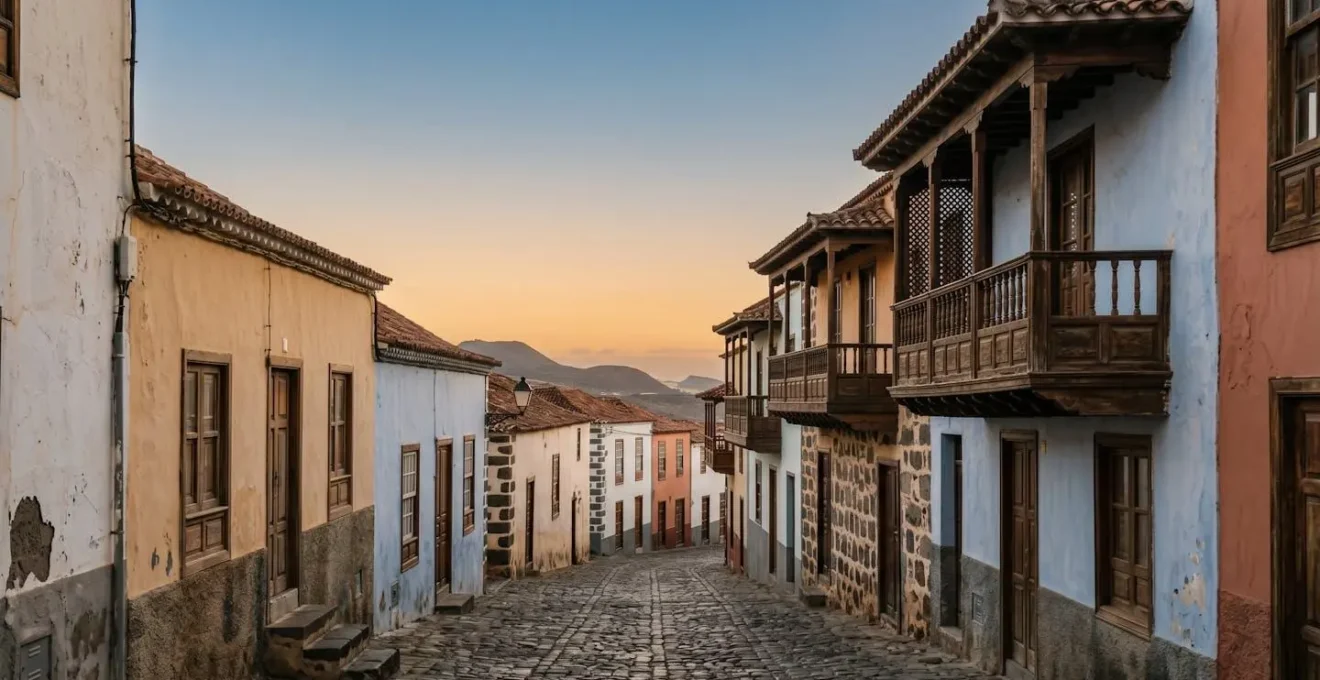
- It involves recognizing the story told by traditional wooden balconies versus the silence of concrete hotel blocks.
Recommendation: Start by observing the ‘siesta rhythm’ instead of fighting it—it’s your first lesson in seeing the island through a local’s eyes.
You’ve seen the pictures: volcanic beaches, dramatic cliffs, and the promise of eternal spring. But you’ve also heard the whispers, the warnings of sprawling resorts, English breakfasts, and a coastline that can feel more like a British seaside town than a Spanish island. You’re a traveler, not a tourist. You want the scent of local cooking, the murmur of Spanish in a quiet plaza, the feeling of discovering something genuine. You want the real Tenerife, but you fear it’s buried under the weight of mass tourism.
Most guides will give you a simple, predictable answer: just go North. They’ll list towns like La Orotava or Garachico as antidotes to the South’s neon glow. While this is a good first step, it’s incomplete advice. It treats authenticity as a pin on a map, a destination you can simply drive to. But what happens when you get there? How do you tell a family-run restaurant from one that just looks the part? How do you connect with a culture when you feel like an outsider looking in?
The secret is this: true authenticity isn’t a place, it’s a language. It’s a series of cultural codes hidden in plain sight. It’s in the architecture of a house, the colour of a fishing boat, the operating hours of a small shop, and the very specific sign you must look for on the side of the road to find the best home-cooked meal of your life. This is not a guide to places, but a key to deciphering those codes. Forget chasing authenticity; it’s time to learn how to read it.
This article will guide you through the subtle signals of genuine Canarian life. We will explore the island’s cultural geography, the power of a few words in the right language, and the visual cues that separate the traditional from the transactional. Get ready to see Tenerife with new eyes.
Summary: Decoding the Real Canary Islands Experience
- Why the North of Tenerife Offers a Truer Canarian Experience?
- How Learning Basic Spanish Changes Your Treatment in Local Bars?
- Siesta Hours: Why Shops Close at 2 PM and When They Reopen?
- The Risk of Eating at Restaurants with Pictures on the Menu
- Traditional Canarian Houses vs Concrete Hotels: Identifying the Real Deal
- Why Artisanal Fishing Boats Are Small and Brightly Painted?
- The ‘V’ Sign: How to Spot a Legal Guachinche from the Road?
- Breaking the Tourist Bubble: How to Make Genuine Connections with Canarios?
Why the North of Tenerife Offers a Truer Canarian Experience?
The first step in your search for authenticity is understanding the island’s fundamental divide. It’s not just a matter of geography; it’s a difference in history, economy, and philosophy. The South, particularly areas like Playa de las Américas and Los Cristianos, wasn’t built for Canarios; it was built for tourism. It’s a purpose-built paradise of resorts and hotels designed for maximum sun exposure and convenience. This isn’t a judgment, but a fact: the vast majority of hotels and resorts are located in the south, creating an economy and an atmosphere entirely planned around visitors.
The North, by contrast, is where Canarian life existed long before the first charter flight landed. Towns like La Orotava, Tacoronte, and La Laguna are not tourist destinations that happen to have locals; they are working Canarian towns that happen to welcome visitors. The economy here is more diversified, rooted in agriculture (especially wine and bananas), local commerce, and the island’s capital, Santa Cruz. Life isn’t scheduled around tourist excursions; it follows its own, older rhythm.
This is where you’ll find cobbled streets that lead to centuries-old plazas, not just beachfront promenades. You’ll see children playing after school and neighbours chatting over their balconies. The North is greener, more dramatic, and its coastline is wilder. It demands more from you than the South does—you might need a jacket in the evening, and the best beaches may require a winding drive—but it offers something far more valuable in return: a glimpse into the island’s soul, not just its sunny facade.
How Learning Basic Spanish Changes Your Treatment in Local Bars?
Once you’re in the North, the next code to crack is linguistic. You’ll notice immediately that English is not the default language it is in the southern resorts. Here, Spanish is the sound of daily life. While many locals, especially in the service industry, speak some English, approaching them in their own language is a powerful act of respect that fundamentally changes the dynamic of your interactions.
It’s not about achieving fluency. It’s about demonstrating effort. Simply starting with « Buenos días, ¿qué tal? » instead of « Hello, » or ordering with « Quisiera un café, por favor » signals that you see yourself as a guest in their culture, not a customer who expects to be catered to. This small shift can be transformative. The transactional barrier drops. A bartender who might have been politely efficient becomes warmer, more patient. You’re no longer just another tourist to be served, but a person making a connection. Suddenly, you might get a recommendation for a local wine you wouldn’t have found otherwise, or a genuine smile instead of a professional one.
Think beyond just « please » and « thank you. » Learn phrases to ask about the day’s special (« ¿Cuál es el menú del día?« ) or to compliment the food (« Estaba muy rico« ). This effort is a form of reciprocal respect. You are showing that you value their culture enough to engage with it, and in return, you are often welcomed into it more deeply. In a world where tourists often expect the world to adapt to them, being the one who adapts unlocks doors you didn’t even know were there.
Siesta Hours: Why Shops Close at 2 PM and When They Reopen?
You’ve found a charming little shop in La Orotava. It’s 2:30 PM, the sun is high, and the door is locked. The shutters are down. You might feel frustrated, thinking it’s an inefficient way to do business. This is a common tourist mistake. You are not witnessing poor service; you are witnessing the Siesta Rhythm, a fundamental code of Canarian life that prioritizes people over profit.
The siesta is not just about a nap. It is the main meal of the day, a time for family to gather, for parents to pick up children from school, and for everyone to escape the most intense heat of the afternoon. In the North, especially in smaller towns, many family-run businesses close from roughly 2 PM to 5 PM. It is a cultural institution that has survived modernization because it is woven into the social fabric. To fight it is to misunderstand it. To embrace it is to start thinking like a local.
Instead of seeing a closed door, see an opportunity. This is your time to have your main meal, too. Find a restaurant offering a « Menú del Día » and enjoy a leisurely lunch. Or, use this time to explore the natural surroundings—a walk in a nearby park or a drive to a scenic viewpoint. When the shops reopen around 5 PM, the town comes alive again. The evening « paseo » (stroll) begins, and the streets are filled with energy until 8 or 9 PM. By aligning yourself with this rhythm, you stop being a consumer on a schedule and start being a participant in the daily life of the town.
The Risk of Eating at Restaurants with Pictures on the Menu
Nowhere is the line between authentic and artificial clearer than on the food scene. The most common advice— »avoid restaurants with pictures on the menu »—is a good starting point, but it’s a red flag, not a complete navigation system. To truly eat well, you need to learn to spot the green flags, the subtle signs that you’ve found a place that cooks for locals, not just for tourists.
A laminated menu in five languages featuring photos of paella and spaghetti bolognese is a clear warning. So is a PR person stationed outside, actively trying to lure you in. These are businesses designed to capture tourist traffic with generic, unchallenging food. The real gems are often understated. They don’t need to shout. Their green flags are quieter. Look for a simple, handwritten chalkboard menu, often exclusively in Spanish. This signals that the offerings change daily based on what’s fresh from the market.
The biggest green flag of all is the « Menú del Día. » This is a fixed-price lunch menu (starter, main, dessert or coffee, and a drink) offered on weekdays. It is the fuel of the local workforce. If you see a restaurant filled with construction workers, office staff, and shopkeepers at 2 PM, you have found gold. The food will be simple, traditional, and made with care. It is food meant to be eaten, not photographed for a brochure.
Case Study: The Mercado Municipal in Santa Cruz
For a perfect example of this principle, visit the Mercado Municipal Nuestra Señora de Africa in Santa Cruz. While it’s a known landmark, the capital city is primarily inhabited by locals. The market’s small eateries and fish stalls serve incredibly fresh seafood and traditional dishes to the people who work and shop there every day. It’s an authentic Canarian food experience, miles away from the tourist traps, hidden within a bustling local hub.
Your 5-Step Audit for an Authentic Eatery
- Menu Analysis: Is the menu a multi-language laminated book with pictures (Red Flag) or a handwritten chalkboard in Spanish (Green Flag)?
- Clientele Check: Is the dining room filled with tourists speaking English (Red Flag) or locals on their lunch break speaking Spanish (Green Flag)?
- Location & Signage: Is it on the main tourist drag with a PR person outside (Red Flag) or tucked away on a side street with minimal signage (Green Flag)?
- The « Menú del Día » Test: Does the restaurant prominently offer a weekday « Menú del Día »? This is a strong indicator of a local focus.
- Atmosphere Scan: Does it feel like a generic international restaurant, or does it have the slightly chaotic, lively, and unpretentious buzz of a local favourite?
Traditional Canarian Houses vs Concrete Hotels: Identifying the Real Deal
The next layer of the code is written in stone and wood. The « visual vernacular » of Canarian architecture tells a story of history, climate, and culture. Learning to distinguish a traditional house from a modern imitation or a soulless concrete block allows you to read the history of a town just by walking through it. Your accommodation choice becomes a conscious act of cultural participation rather than a simple transaction.
Forget the sprawling, anonymous hotel complexes. Seek out « casas rurales » or historic city-centre hotels that celebrate authentic design. The key features are easy to spot once you know what to look for. The most iconic element is the Balcón Canario, an ornate, carved wooden balcony, typically made from the dense, resilient heartwood of Canary pine. These are not just decorative; they were a status symbol and a way to ventilate the home. Look for simple, thick stone or tapia (rammed earth) walls, which provide natural thermal regulation against the volcanic heat.
Inside, true Canarian homes often feature a patio interior. This is not just a space for a plastic table and chairs, but a genuine internal courtyard, often lush with plants and sometimes featuring traditional water-distilling stones, creating a cool, private oasis. The beauty is in the craftsmanship and the functionality, with unadorned facades that reserve all their decorative flair for the intricate latticework of the balconies. Choosing to stay in a place like this connects you to the island’s heritage in a way a modern hotel never can.
Case Study: Casa de los Balcones
Built in 1632 in the heart of La Orotava, the Casa de los Balcones is a living museum of this architectural style. Its magnificent carved balconies, volcanic lava stone floors, and lush central courtyard epitomize the 17th-century merchant-class home. Preserved since 1953, it stands as a testament to the island’s heritage and a perfect reference point for the authentic architectural details you should seek out in your own accommodation.
Why Artisanal Fishing Boats Are Small and Brightly Painted?
The visual code of authenticity extends to the sea. Wander down to any small harbour in the North—like Puerto de la Cruz or Garachico—and you will see them: small, colourful wooden boats bobbing in the water. These are not pleasure crafts. They are the tools of artisanal fishermen and a direct link to the island’s plate. Their size and colour tell a story of tradition and practicality.
The boats are small because they are typically operated by one or two people, practicing a sustainable form of fishing close to the shore. They are not industrial trawlers depleting the ocean, but a vital part of the local economic footprint. The fish they catch in the morning is often served in the local restaurants by lunchtime. This is the « boat-to-plate » connection that tourist-trap restaurants with frozen seafood can only imitate.
And the bright colours? This tradition, common in many fishing communities, has a simple, practical origin: visibility at sea. But it’s also said that fishermen used leftover paint from their houses, creating a vibrant, eclectic fleet that reflects the individuality of each owner. Looking at these boats, you see more than just wood and paint. You see resilience, a connection to the sea that has sustained families for generations, and a floating symbol of the local food chain you should aspire to be a part of. When you choose a restaurant that serves « pescado del día » from one of these boats, you are supporting this entire ecosystem.
The ‘V’ Sign: How to Spot a Legal Guachinche from the Road?
This is the master level of Canarian code-breaking. You have probably heard of a guachinche, but the term is widely misused by regular restaurants to attract tourists. A true, legal guachinche is not a restaurant. It is a temporary establishment, often in someone’s garage or the back room of their farmhouse, where a local winemaker sells the surplus of their own, home-grown wine directly to the public.
By law, they have strict rules. They can only open for a maximum of four months per year, or until their homemade wine from that season’s harvest is sold out. The food menu is legally restricted to a few simple, traditional Canarian dishes—like papas con mojo (potatoes with sauce), carne de fiesta (marinated pork), or gofio (a toasted grain flour)—intended only to accompany the wine, which must be the main event. This is the heart of the experience: it’s all about the wine, produced by the owner from their own registered vineyards.
So how do you find one? Forget slick signs. Look for a makeshift, often hand-painted sign on the side of a rural road, especially in the wine-growing regions of the North. The most important clue is a simple letter: ‘V’. A legal guachinche will have the classification ‘V’ (for Vino de cosecha propia – wine from own harvest). A standard restaurant is ‘R’, and a bar is ‘BC’. That ‘V’ is your guarantee of authenticity. Regional wine tourism data indicates that the most authentic guachinches are found in northern towns like La Matanza, Tacoronte, El Sauzal, and La Orotava.
Case Study: The Preservation of a Tradition
The guachinche is a cherished part of Canarian identity, but it’s a tradition under threat. As a report from Slow Food highlights, these establishments face challenges from strict regulations, competition from fake guachinches, and a lack of interest from younger generations in the hard work of agriculture and winemaking. Finding and supporting a real guachinche is not just a great meal; it’s an act of cultural preservation.
Key Takeaways
- Authenticity is not a location but a series of cultural codes you can learn to read.
- Effort in language, even basic Spanish, transforms interactions from transactional to personal.
- Look for « green flags » like handwritten menus and the « Menú del Día » to find genuine local eateries.
Breaking the Tourist Bubble: How to Make Genuine Connections with Canarios?
You’ve learned to read the codes. You can spot a real guachinche, you appreciate the siesta rhythm, and you know your carne de fiesta from your ropa vieja. The final step is to use this knowledge to break out of the tourist bubble and forge genuine, respectful connections. This is perhaps the most challenging part, especially on an island where tourism is such a dominant force. In 2024, for example, Tenerife hosted 7.4 million tourists, a figure that can create a natural distance between visitors and a local population protective of its identity.
The key is not to force it. Genuine connections are not made through loud, intrusive attempts at friendship. They are built on a foundation of quiet observation, respect, and routine. Instead of trying to talk to everyone, become a regular. Visit the same small café for your morning coffee each day. Buy your bread from the same panadería. A simple nod of recognition on day two can become a « Buenos días » on day three and a brief chat by day five. It’s an organic process built on familiarity, not pressure.
Participate in local life on its own terms. Visit the local markets on a weekday, when they are serving the community, not just on a Sunday when they are geared towards tourists. Attend a local fiesta or a concert in a town plaza, not as the main attraction, but as a respectful observer. Spend your money thoughtfully, minimizing your impact by patronizing small, family-run businesses where your spending directly supports the local economy. These actions demonstrate a level of awareness and respect that Canarios notice and appreciate.
By choosing to travel this way—observing, learning, and participating respectfully—you do more than just have a better holiday. You become part of the solution, contributing to a form of tourism that values and preserves the very culture you came to experience. Start by applying these principles, and discover the authentic Tenerife that awaits beyond the neon lights.