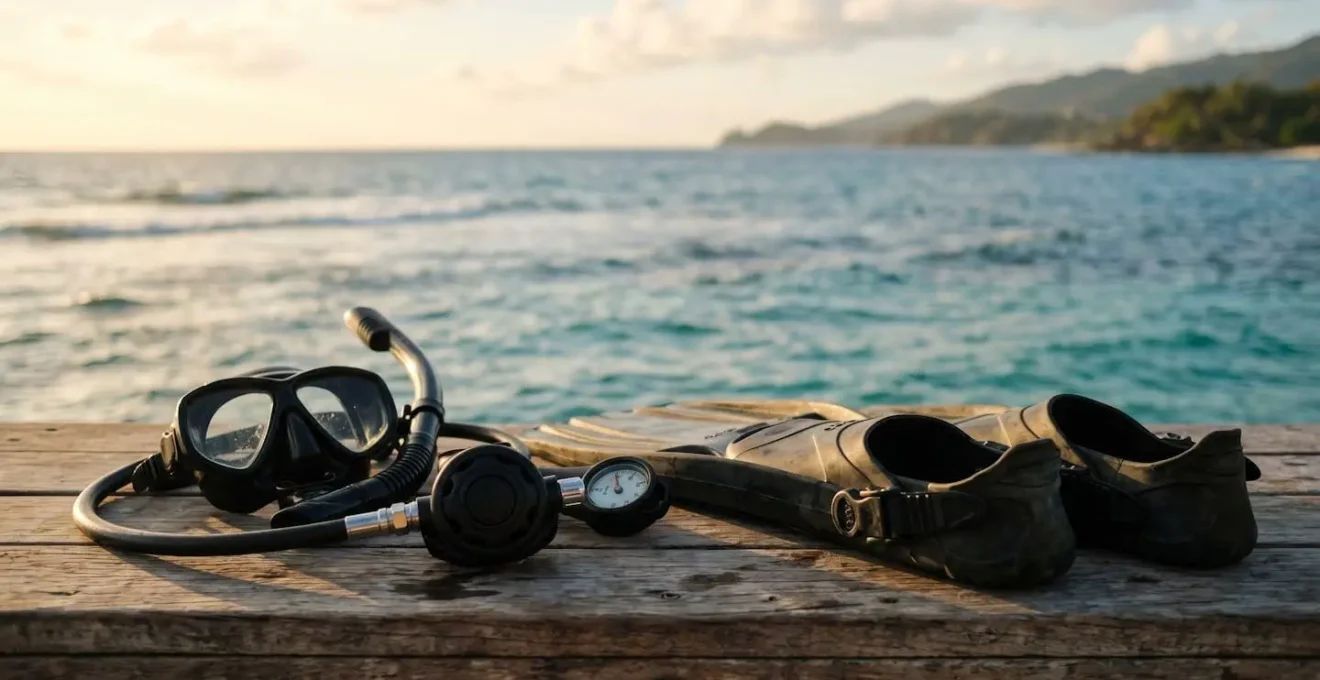
The key to a budget-friendly Tenerife dive trip isn’t just avoiding high season, but making smart, diver-specific financial choices that typical tourists miss.
- Paying a bit more for a ‘Sports Equipment’ flight fare can save you over £50 in hidden baggage and rental fees.
- A ‘Menu del Día’ lunch strategy can cut your daily food bill by over 50% compared to typical tourist restaurants.
- Third-party excess insurance for your rental car offers the same protection as expensive daily upgrades, but for a fraction of the cost.
Recommendation: By focusing on these strategic trade-offs, you can afford a premium diving experience without getting fleeced, even during peak times.
The idea of a one-week dive trip to Tenerife during high season often conjures images of soaring prices and crowded boats. Many divers from the UK either dismiss it as too expensive or resign themselves to a hefty bill. The standard advice you’ll hear is predictable: « book flights early, » « compare dive centres, » and « avoid eating out. » While not wrong, this advice barely scratches the surface and misses the unique financial levers available specifically to divers.
The real challenge isn’t just about saving money; it’s about understanding the value-density of your spending. A diver’s budget has line items a regular tourist’s doesn’t, from sports equipment baggage to dive package structures and gear-specific insurance. The secret to a cost-effective trip lies not in across-the-board cheapness, but in making strategic trade-offs. It’s about knowing where to spend a little more to save a lot elsewhere and how to leverage local knowledge to your advantage.
This guide moves beyond the platitudes. We will break down the key financial decision points you’ll face, from the moment you book your flight to the way you manage your rental car. We will analyse the real-world costs and benefits of different choices, empowering you to build a smart budget that maximises your time underwater without draining your bank account. It’s time to stop thinking like a tourist and start planning like a savvy diver.
This article will guide you through the essential budgeting strategies for your trip. Below is a summary of the key areas we will cover to help you plan effectively.
Summary: Your Strategic Budgeting Guide for a Tenerife Dive Trip
- Why Booking Flights with ‘Sports Equipment’ Allowance Saves You £50?
- 6-Dive Pack vs Unlimited Diving: Which Offers Better Value for You?
- Supermarket vs Restaurant: Daily Food Costs in Tenerife South
- The Mistake of Booking During School Half-Term Dates
- When to Book Your Dives to Secure Spots on the Best Boats?
- Why Hotel Balconies Are Terrible Places to Dry Wetsuits?
- Full Comp vs Excess: Analyzing the Risk of Scratches in Narrow Streets
- Which 5 Dive Sites Should You Prioritize for a 1-Week Holiday in the South?
Why Booking Flights with ‘Sports Equipment’ Allowance Saves You £50?
For a diver, the cheapest flight isn’t always the one with the lowest ticket price. Budget airlines are notorious for their restrictive baggage policies, and this is where many divers get caught out. A standard checked bag often has a 15-20kg limit, while a full set of dive gear can easily weigh 18-22kg. Exceeding this limit can result in punitive overweight fees, often around £10-12 per kilo, instantly negating any initial saving. The alternative, renting a full set of gear in Tenerife, costs around €25 per day, adding up to €150+ for a week of diving.
The strategic trade-off here is to actively seek out airlines that offer a ‘Sports Equipment’ or ‘Dive Gear’ allowance. While this fare might look slightly more expensive upfront, it typically includes a generous 23-32kg allowance for a fixed price. This single move provides two major benefits: it eliminates the stress of overweight charges and saves you a significant amount on rental costs. The maths is simple: paying an extra £30-£40 for a sports baggage fare to save £150 on gear rental is a huge win.
This approach transforms baggage from a potential friction cost into a planned investment. Below is a general comparison that illustrates the financial logic.
| Airline Strategy | Standard Fare + Baggage | Sports Equipment Fare | Weight Limit | Potential Savings |
|---|---|---|---|---|
| Budget Airline (Standard) | Base fare + £25 bag + £50 overweight | N/A | 15kg | – |
| Sports Equipment Option | N/A | Fixed price (includes 23kg) | 23kg | ~£50+ |
Action Plan: Your Dive Gear Break-Even Calculation
- List Gear: Itemise the personal gear you intend to bring (regulator, computer, mask, wetsuit).
- Calculate Weight: Weigh your packed dive bag to get a realistic total.
- Compare Fees: Check the airline’s standard baggage fee versus its pre-booked sports equipment allowance.
- Research Rentals: Note down Tenerife rental costs for the items you’d need (e.g., Regulator €10/day, Full Set €25/day).
- Find Break-Even: Calculate if bringing your own gear with a sports allowance saves money over the duration of your trip (it almost always does for 4+ dives).
6-Dive Pack vs Unlimited Diving: Which Offers Better Value for You?
Dive centres in Tenerife are brilliant at packaging their services, but « unlimited diving » deals can be a value trap for a one-week holiday. These packages often sound tempting, promising endless underwater exploration. However, the reality of a 7-day trip, which includes arrival and departure days, surface intervals, and other non-diving activities, means you’re unlikely to complete more than 8-10 dives comfortably. The « unlimited » offer is priced to account for this, often costing €450 or more.
The more pragmatic approach is to assess your realistic diving appetite. Most divers on a week-long trip find that a 6 or 10-dive pack offers the best value-density. For instance, current Tenerife dive centre pricing shows a 10-dive pack can cost around €380, or €38 per dive. This provides a structured plan and leaves you with free time to explore the island or simply relax, without feeling the pressure to « get your money’s worth » from an unlimited package. The key is to pay for what you will actually use, not what you could theoretically do.
This visual metaphor highlights the core decision: choosing a defined, efficient plan versus an open-ended, potentially more expensive one. For most week-long trips, the defined 6 or 10-dive package represents a smarter financial strategy. It ensures you experience the best of Tenerife’s underwater world while keeping your budget in check and your holiday schedule flexible. Don’t let the fear of missing out push you into a package that doesn’t fit your schedule.
Supermarket vs Restaurant: Daily Food Costs in Tenerife South
Food is a major expense on any holiday, but in Tenerife, a smart strategy can dramatically reduce your daily costs without resorting to eating pasta in your apartment every night. The typical tourist approach of eating breakfast, lunch, and dinner in restaurants in prime locations like Las Américas or Costa Adeje can easily set you back €50-70 per person, per day. The secret to local leverage is the « Menu del Día. »
Many local, non-tourist restaurants offer a fixed-price three-course lunch menu, including a drink, for an incredibly low price. A recent analysis of Tenerife travel costs puts the price of a Menu del Día at just €8-15. By making this your main meal of the day, you get to experience authentic Canarian food at a fraction of the cost. Combine this with a simple supermarket breakfast (fresh bread, cheese, fruit) and a light dinner or gourmet picnic from Mercadona or HiperDino, and your daily food budget can plummet to under €25.
It’s also crucial to understand local pricing customs. Always check if the 7% Canarian tax (IGIC) is included (‘IGIC incluido’). Furthermore, tipping culture is different from the UK; 5-10% is appreciated for good service but not obligatory, and rounding up by a euro or two is common in cafes. Avoiding the pressure to tip 15-20% is another small but significant saving.
This table breaks down how different eating strategies impact your daily budget, demonstrating the power of adopting a more local approach.
| Meal Strategy | Breakfast | Lunch | Dinner | Daily Total |
|---|---|---|---|---|
| Full Restaurant (Tourist Areas) | €8-12 | €15-25 | €20-35 | €43-72 |
| Menu del Día Strategy | Supermarket €3-5 | Menu del Día €10-13 | Supermarket €5-8 | €18-26 |
| Gourmet Picnic (Supermarket) | €3-4 | €6-8 (local cheese, jamón) | €8-12 | €17-24 |
The Mistake of Booking During School Half-Term Dates
While « high season » is a broad term, not all peak periods are created equal. For a British diver, the single biggest budgeting mistake is booking a trip that coincides with UK school half-term holidays (especially October and February). Tenerife is a hugely popular family destination, and during these specific weeks, demand for flights and accommodation skyrockets. This isn’t a gradual increase; it’s a sudden and dramatic price hike.
A deep dive into travel industry analysis reveals a sharp 20-40% price increase for flights and hotels during school holidays compared to the weeks immediately before or after. A flight that costs £150 one week can easily jump to £250 the next, simply because it falls within the half-term window. This price inflation often has little to do with weather or diving conditions, which remain excellent, but is purely driven by UK-specific demand.
The strategic move is simple but powerful: check the half-term dates for the major UK regions and consciously book your trip outside of them. Shifting your one-week holiday by just seven days can result in savings of 30% or more on your core travel costs. For example, a hypothetical package holiday might cost £1,200 per person during October half-term but only £800 for the identical trip the week before. That’s a £400 saving per person that can be reallocated to more dives, better food, or simply kept in your pocket. This is the easiest win in your entire budget plan.
When to Book Your Dives to Secure Spots on the Best Boats?
In the age of last-minute deals, it’s tempting to leave booking your dives until you arrive in Tenerife. This is a critical error. The best dive centres—those with top-tier safety records, experienced guides, and access to the most sought-after sites—are often fully booked weeks or even months in advance, especially in high season. Waiting until you arrive means you’ll likely be left with the less popular centres or be unable to get on the specific boat trips you want.
The correct booking sequence is counter-intuitive for many travellers. You should secure your dive package *before* you book your accommodation. The availability of a quality dive centre is the most critical and least flexible component of your trip. The optimal strategy is to first research and contact your top 2-3 dive centres with your proposed dates. Once you have a written confirmation of their availability, you can then book your flights (with the sports equipment allowance!) and immediately confirm your dive package with a deposit. Only then should you book your accommodation, which is the most flexible part of the equation with plenty of last-minute options available.
This disciplined approach ensures your entire trip is anchored around the most important activity. It guarantees you a spot with a reputable operator and prevents the disappointment of a sold-out dive trip. Following a clear booking sequence is not just about logistics; it’s about securing the quality of your core experience. Your planner should prioritise confirming your dives above all else.
Why Hotel Balconies Are Terrible Places to Dry Wetsuits?
After a fantastic day of diving, the first instinct is to hang your wet gear out on the hotel balcony to dry in the sun. This is one of the worst things you can do, for both your equipment and your wallet. Firstly, direct sunlight is the enemy of neoprene. UV rays rapidly degrade the material’s elasticity, drastically shortening the lifespan of your expensive wetsuit and BCD. A suit that could last for years might lose its flexibility and start to crack after just a few holidays of improper care.
Secondly, there are significant security and financial risks. A balcony full of expensive dive gear is a blatant advertisement for thieves, and equipment theft from tourist accommodations is not uncommon. Furthermore, many hotels and apartment complexes in Tenerife explicitly forbid drying items on balconies. The dripping water can be a nuisance to guests on the floors below, and management may levy a fine if you are caught. This is a classic example of a hidden « friction cost » that can be easily avoided.
The professional solution is to choose your dive centre wisely. As the PADI professional guidelines suggest, a hallmark of a quality operator is the provision of proper facilities for their customers.
A key indicator of a professional, high-quality dive center is whether they offer a secure, well-ventilated drying room for customer equipment.
– PADI Dive Center Quality Standards, Professional dive center facility guidelines
When researching dive centres, make a dedicated, secure drying room a non-negotiable criterion. This ensures your gear is rinsed properly, dried safely away from UV rays, and stored securely overnight, preserving your investment and giving you peace of mind.
Full Comp vs Excess: Analyzing the Risk of Scratches in Narrow Streets
Renting a car in Tenerife is essential for reaching diverse dive sites, but it comes with a major financial pitfall: insurance. The seemingly cheap headline rental prices often come with a staggering insurance excess. A market analysis of Tenerife car rentals indicates that this excess or deductible can be between €800 and €1500. In the narrow, stone-walled streets of Canarian villages or tight car parks, a minor scratch is a very real possibility, and a single panel repair can easily cost €500, which you would be liable for.
Rental companies will aggressively upsell their « full » or « zero-excess » insurance at the desk, often costing €12-18 per day. For a week, that’s an extra €84-126 on top of your rental fee. Here lies another opportunity for a strategic trade-off. A far more cost-effective solution, well-known to savvy UK travellers, is to purchase a standalone, third-party Car Hire Excess Insurance policy *before* you travel. Companies like Insurance4CarHire offer annual policies for around £40-50 (€50) that cover you for multiple trips worldwide.
The process is simple: you decline the rental company’s expensive daily upgrade. If you do have an accident, you pay the excess to the rental firm and then claim the full amount back from your third-party insurer. This strategy gives you the exact same financial protection as the « full » insurance but for a fraction of the cost. For a single one-week trip, you save at least 50%, and if you travel more than once a year, the savings are enormous. This is the ultimate pragmatic choice for peace of mind without being overcharged.
Key Takeaways
- Flight Strategy is Key: Paying more for a ‘Sports Equipment’ baggage allowance is a smart investment that saves significantly on gear rental fees.
- Right-size Your Diving: Choose a 6 or 10-dive pack for the best value-density on a one-week trip, avoiding the « unlimited » value trap.
- Eat Like a Local: Leverage the ‘Menu del Día’ for lunch to cut daily food costs by over 50% while enjoying authentic cuisine.
Which 5 Dive Sites Should You Prioritize for a 1-Week Holiday in the South?
With a limited one-week schedule, you can’t dive everywhere. Prioritising sites based on your experience level and interests is crucial to maximising your time. Tenerife’s volcanic underwater topography offers incredible diversity, and the south is particularly rich in accessible, world-class sites. The diving conditions are generally excellent year-round, with water temperatures ranging from 18-25°C and visibility often exceeding 20-30 metres.
Rather than randomly picking from a dive centre’s list, having a clear wish list allows you to have a focused conversation with your dive guide. Here are five top-tier sites in the south of Tenerife, categorised to help you build a priority list that matches your diving profile:
- For Novice Divers & Refreshers: Abades Bay. This shore or boat dive offers a gentle slope from 8-20m and is famous for its year-round population of resident green turtles. Its accessibility makes it perfect for the first dive of the trip.
- For Wreck Enthusiasts: El Condesito. A 10-minute boat ride from most southern ports, this cement-carrying cargo ship wreck is an easy and enjoyable dive, perfect for a two-tank morning trip.
- For Marine Life Lovers: El Puertito (Turtle Spot). Famous for its almost guaranteed turtle sightings, this bay features seagrass beds and rocky bottoms where turtles come to rest. It’s an iconic Tenerife experience.
- For Underwater Photographers & Geologists: Montaña Amarilla. Meaning « Yellow Mountain, » this site boasts dramatic, surreal volcanic landscapes with caves, arches, and swim-throughs. The light and formations are a photographer’s dream.
- For Advanced Divers: The Cliffs of Los Gigantes. While a longer boat trip, these deep wall dives (25-40m) offer a chance to see pelagic species like eagle rays and barracudas, and it’s a known habitat for the critically endangered angel shark. This requires an Advanced Open Water certification or higher.
Discussing these specific sites with your chosen dive centre when booking will help them craft the perfect weekly schedule for you, ensuring every dive is a memorable one.
By applying these strategic budgeting principles, you transform your holiday planning from a game of chance into a calculated exercise in value. Start today by researching your flight options and dive centres to build a trip that is both unforgettable and affordable.